
The cobbles below the ridge in Georgetown are not decoration. They are the original surface, laid when this was a working tobacco port with its own wharves and no federal city attached to it. On a September morning they hold the damp until the sun clears the rooftops, and the brick underfoot is loud enough that you hear a walking group before you see one. Come for the ghost stories by all means, but the good ones here are pinned to real crypts, real burial grounds and a real 1765 foundation, and the walk is better for knowing which is which.
What the walk actually covers
Georgetown sits on a ridge that falls to the Potomac in about four blocks, and almost every decision you make here is really a decision about that slope. The historic core is roughly a mile and a half (2.4 km) end to end, from the upper streets of mansions and gardens down through the commercial strip to the canal and the river. Walked straight through with no stops, it is about forty minutes. Walked as a history route with a guide, it is two hours. Walked properly on your own with two house interiors, a cemetery and lunch, it is a comfortable five to six hours, which is the version most people should plan for, because Georgetown is the one part of Washington where the indoor stops are small, scattered and run on stubborn opening hours.
What you actually see, in order of the slope: Federal and Georgian brick terraces that have never been rebuilt; two nineteenth-century burial grounds that tell opposite halves of the same story; a Gothic Revival chapel; a re-watered canal with working locks; a film-famous stairway that is also a piece of streetcar infrastructure; and a river park that was a rail yard within living memory. The ghost-story layer sits on top of that. Georgetown's dark-history walks lean on documented deaths, a family crypt and a 1973 film, and the honest guides say so. If a route promises you apparitions, it is selling. If it promises you the crypt where a president sat with his dead son, it is telling you something that happened.
For the wider city, the Washington guide covers the Mall and the museums; this piece stays inside Georgetown, which is a different kind of day entirely.
The houses that still hold the paperwork
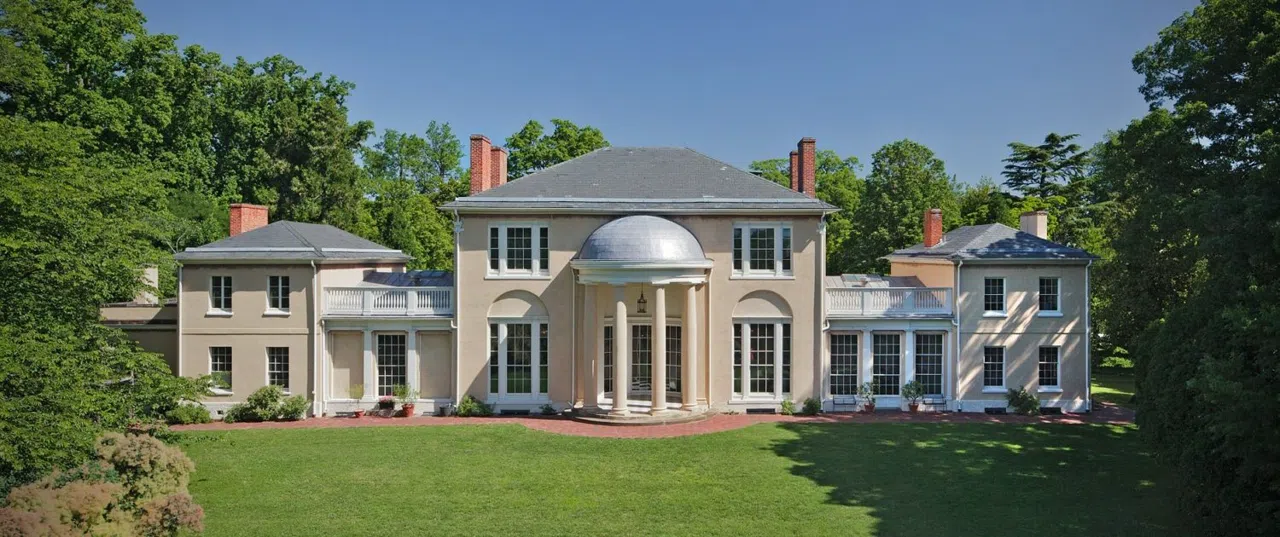
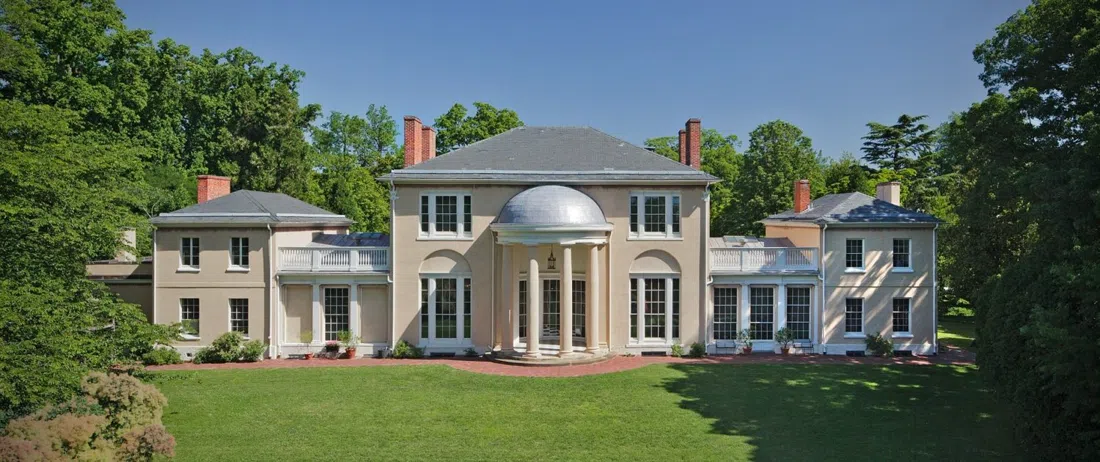
Tudor Place Historic House & Garden (upper Georgetown, near the top of the ridge) is the strongest indoor history stop in the district and the one I would protect in a tight schedule. It was built for Martha Washington's granddaughter and held by one family for six generations, so the objects inside are not a curated impression of a period. They are one household's accumulation. The house interior is guided-tour-only with capped tour sizes, so you are joining a timed group whether you planned to or not. It opens Tuesday to Saturday 10 to 4 and Sunday 12 to 4, the last tour goes at 3pm and the garden gates shut at 3:30. Suggested donation is $10 for adults and $5 concession; the garden is free and self-guided, and it is the only garden up here big enough to absorb a large party without anyone standing in a flowerbed. Parties of ten or more must reserve in advance (two weeks preferred) and pay a per-person fee.
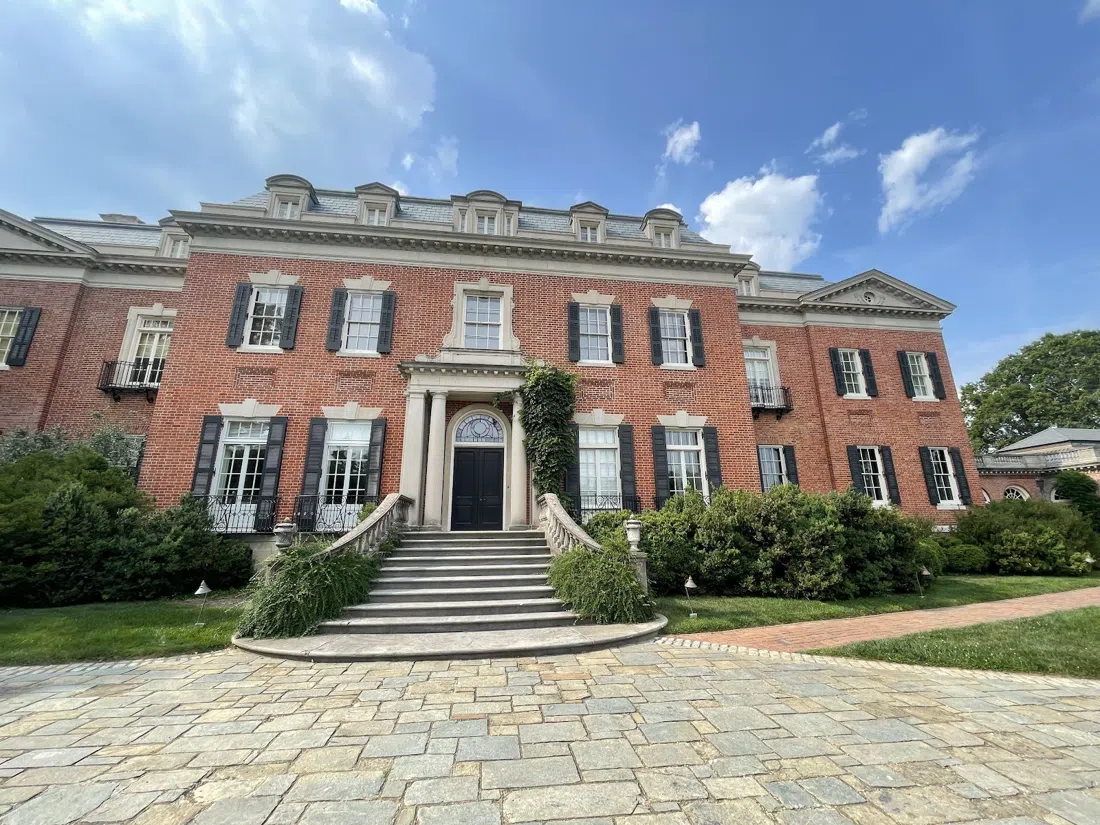
Dumbarton Oaks Museum & Gardens (upper Georgetown, a few streets east) carries genuine international weight: this is where the 1944 talks that drafted the UN Charter were held. It also has the most awkward timetable in the neighbourhood, and getting it wrong wastes an afternoon. The museum runs 11:30 to 5:30 Tuesday to Sunday and is free. The gardens run only 2 to 6pm, Tuesday to Sunday, and cost $15 in the regular season, which runs to 31 October and therefore covers all of September. The move is to arrive at 11:30 for the museum and walk straight into the 2pm garden slot. Tickets are timed-entry and online-only, and garden tickets are capped at ten per household per day, which splits any larger party across separate slots unless you contact the museum ahead for a group arrangement.
Old Stone House (on the M Street strip, mid-slope) is the oldest structure in Washington still standing on its original 1765 foundation, and it is free. Be clear-eyed about what is currently open: the ground-floor kitchen and the shop, nothing above them, and only Friday to Monday. A Tuesday or Wednesday visitor gets the garden behind it and a locked door. There is no booking system and the interior is tiny, so groups should brief outside in the garden and filter in a few at a time rather than queueing on the pavement.

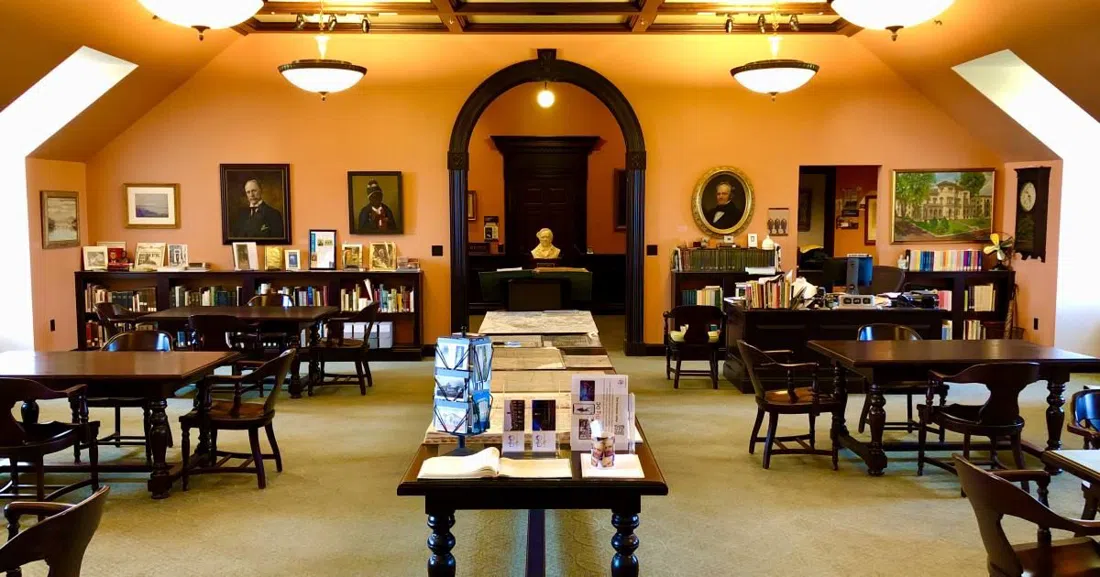
Peabody Room, Georgetown Neighborhood Library (north Georgetown) is for a specific kind of traveller: anyone tracing a building, a family or an address. Founded in 1935, it holds house-history files for individual Georgetown addresses, which is catnip if you have an ancestor or a deed to chase. Access is severely limited. Walk-in hours are Tuesday and the first Saturday of the month only, 10 to 6, closed 1 to 2pm. It is a small reading room for individuals and pairs, not a group venue; groups should contact the People's Archive in advance.
Two burial grounds and the stories attached to them
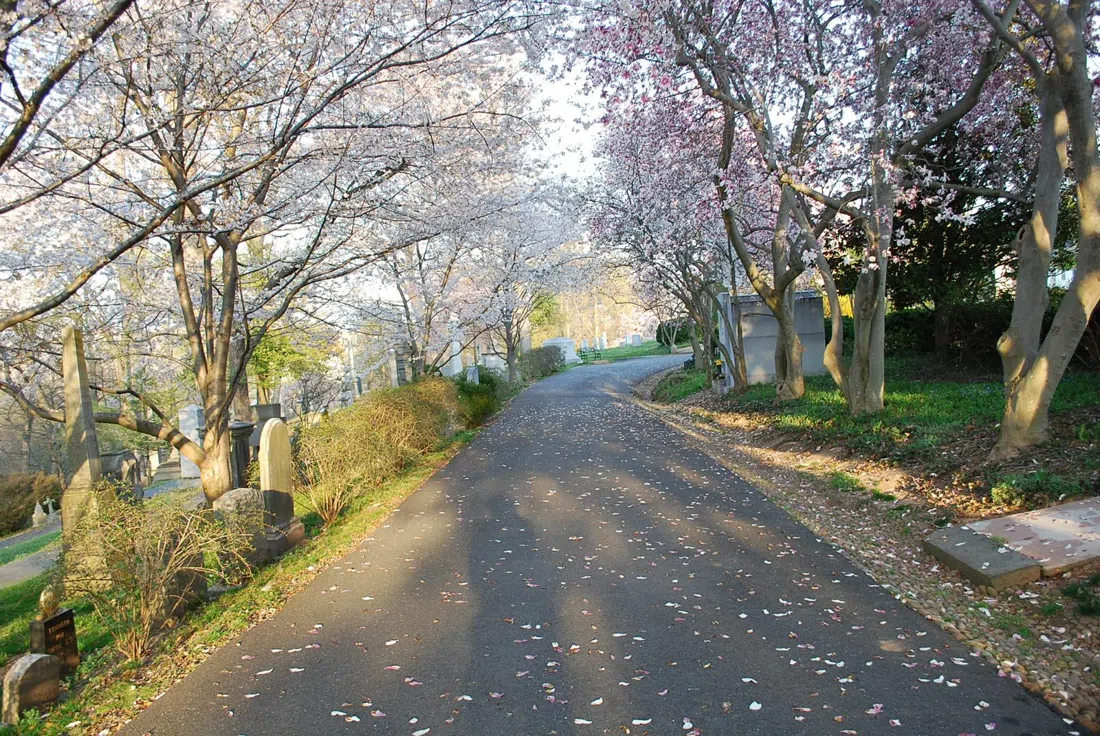
Oak Hill Cemetery (north Georgetown, above the Rock Creek valley) is where most of the ghost-walk material actually lives, and it is a fine walk on its own terms in early autumn: terraced, heavily shaded, quiet. It holds Renwick's only Gothic Revival church in Washington, and the Carroll crypt made famous by Lincoln's grief. Entry is free with a suggested donation; check in at the gatehouse. It opens every day except Thanksgiving, Christmas and New Year's Day, and it closes early in bad weather, which in September means a passing thunderstorm can end your visit without warning. Private and operator-led group tours are permitted by arrangement rather than by turning up with twenty people.
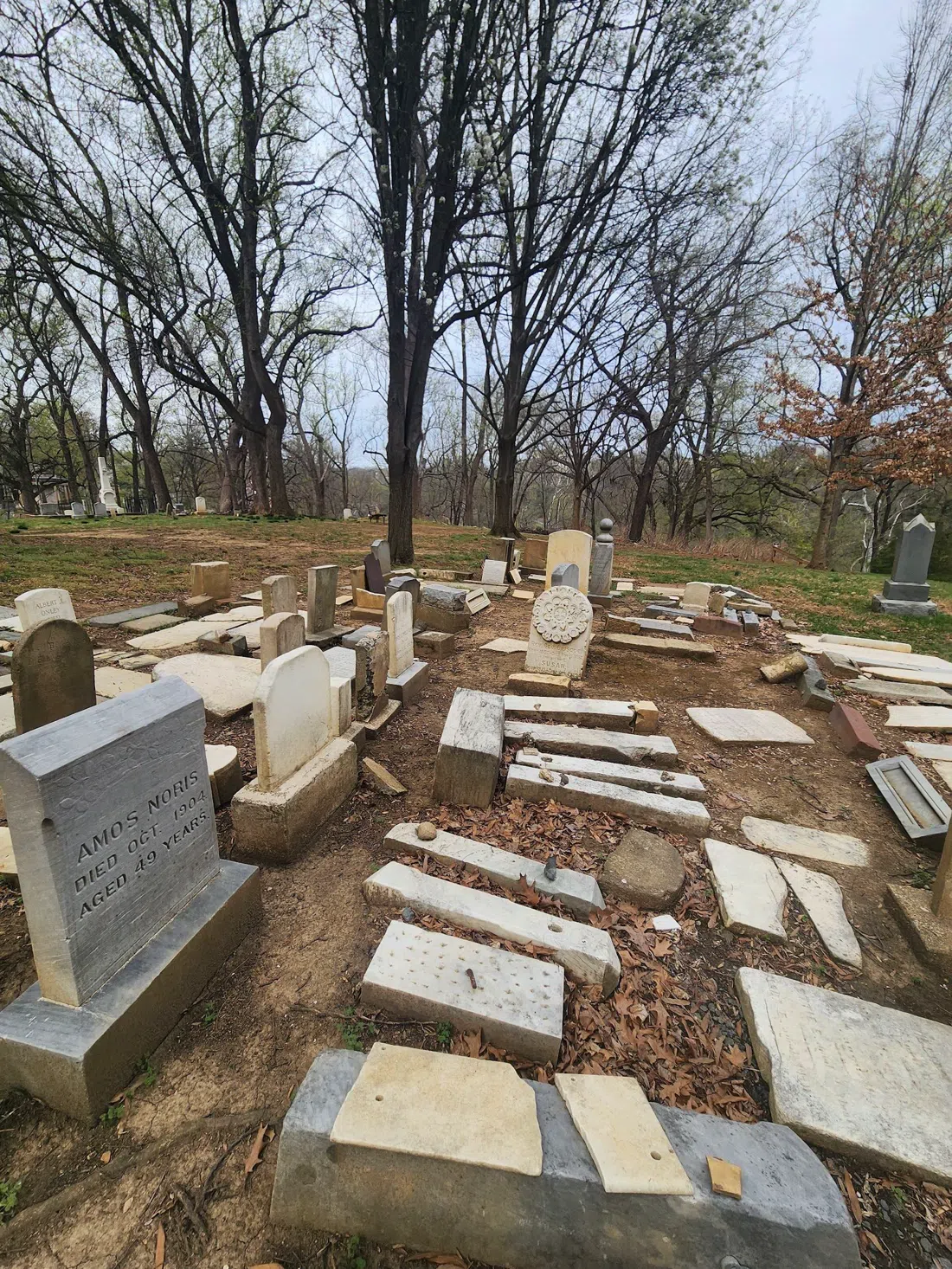
Mount Zion & Female Union Band Society Cemeteries (the eastern edge of Georgetown) is the necessary counterweight to the mansions-and-presidents version of this district. It is the burial ground of free and enslaved Black Georgetowners, and it changes the shape of everything you have walked past all morning. A free QR-code self-guided tour of about thirty minutes starts at the entrance. Practical warnings matter here: no toilets, no water, no dogs, and restoration work is ongoing with some memorials relocated for safekeeping, so the ground is uneven and parts may be fenced. Parking is very limited, so arrive on foot or by transit. Groups should contact the Black Georgetown Foundation directly rather than improvising.
The canal, the steps and the river
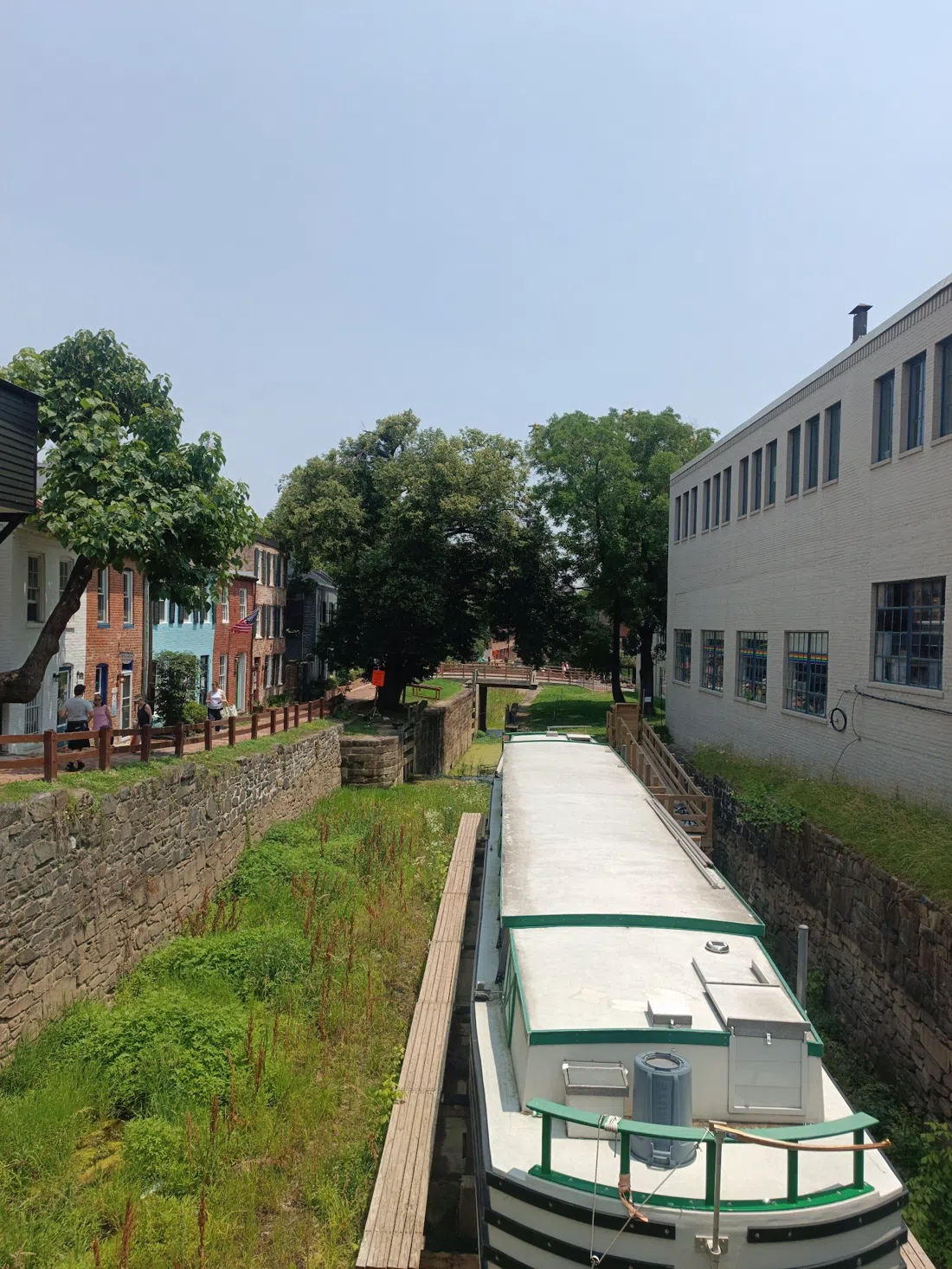
The C&O Canal National Historical Park — Georgetown Visitor Center and towpath (the canal corridor, one block south of M Street) is the best free self-guided history in Georgetown, and after the multi-year lock and wall restoration the canal is re-watered and worth the hour it takes to walk. Set your expectations on one point: the Georgetown canal boat is out of service in dry dock, with the aim of relaunching it in spring 2027, so anyone picturing a boat ride will be disappointed this September. The visitor centre itself is small; groups gather on the lock apron between 30th and Thomas Jefferson Street.
The Exorcist Steps (west end of Georgetown, beside the university) are free, open around the clock and steeper than photographs suggest: seventy-odd risers in a narrow slot between buildings. They are officially commemorated as part of the Capital Traction Company Union Station site, which makes them a rare landmark that is simultaneously real transport history and film pilgrimage. Two honest cautions. They are poor for anyone with mobility issues, with little in the way of handrails or landings and a genuine drop. And they are a working public stairway used by commuters, so a group must stand to one side and let people through. September dusk, when the light goes soft around seven, is the hour they photograph best.
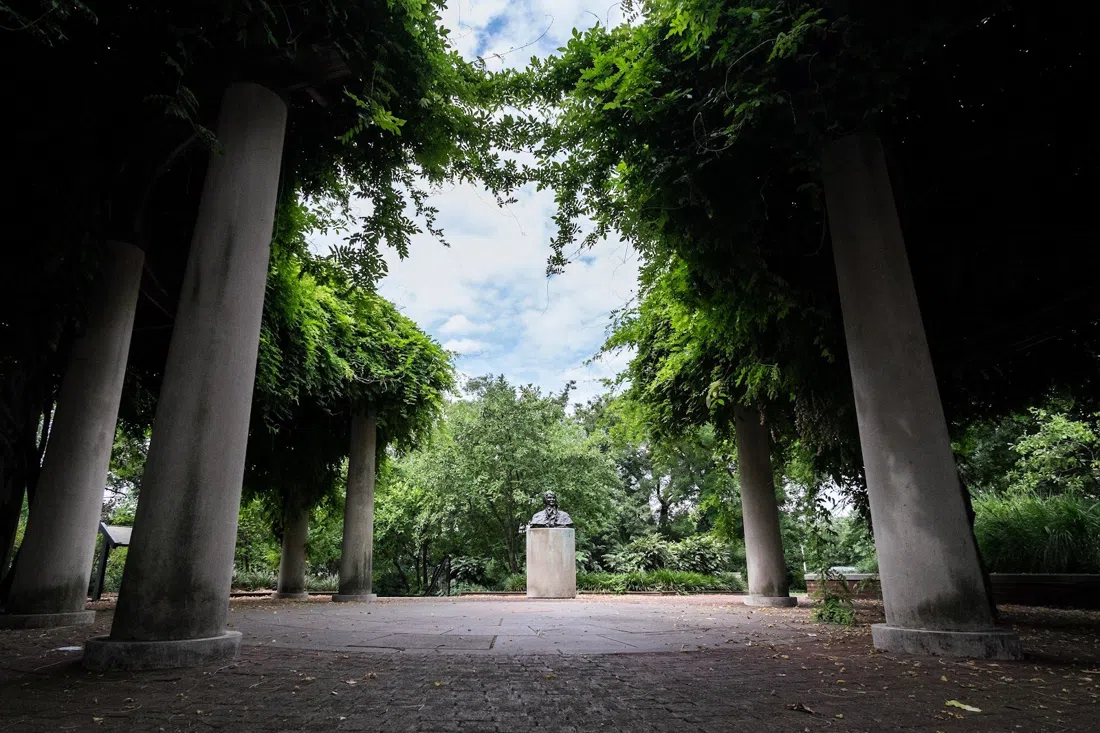
Francis Scott Key Park (west end of M Street, by the bridge approach) is five minutes, not an afternoon: a one-acre plot where the author of the American national anthem lived, with three interpretive panels that give international visitors the plainest available explanation of why that flag carries the weight it does. It is a good free assembly point before crossing to the canal or the waterfront.
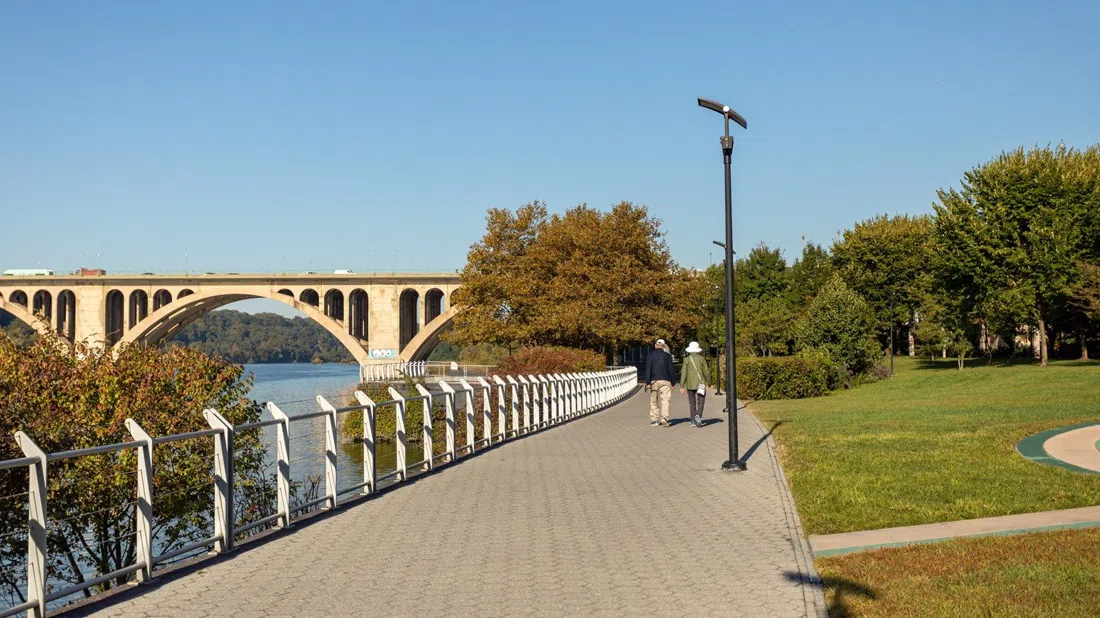
Georgetown Waterfront Park (the riverfront below K Street) closes the loop. This was a working industrial waterfront and rail yard until the park was completed in 2011, so the view at the end comes with the last chapter of the canal-and-commerce story you have been walking. The fountain is seasonal and warm September evenings are the park's best hour.
Georgetown University, Healy Hall and the Healy Gates (the western hill) is freely walkable outdoors and is where most walking routes turn around. It is the oldest Catholic university in the country and a National Historic Landmark, and the exterior and the quad carry the visit entirely. Do not promise yourself the cast-iron Riggs Library inside Healy. It is a private university function space and not open to visitors. Student-led tours are for prospective applicants, not sightseers.

Guided or on your own
Georgetown rewards a guide more than most of Washington, because the best material is invisible: who owned which house, what the canal moved, which graves were moved and why. Three formats are worth knowing.
DC by Foot (departures from central Georgetown) runs a Historic Georgetown route daily at 10:30am, about two hours over 1.5 miles of uneven ground, led by licensed professional historians. The route was built by Canden Arciniega, who wrote Wicked Georgetown, and the content is a clear cut above general city coach commentary. It is the budget-tier option, booked through the operator's own calendar, with free cancellation up to 24 hours ahead. The small-group format fills.

Preserve Tours (Georgetown, meeting point given at booking) caps every departure at ten people, so a larger party needs multiple departures or a private booking. It was founded by a fourth-generation Washingtonian with a decade in urban planning, and the angle is properly architectural: Federal, Georgian and Victorian fabric read building by building, plus the university. The guide photographs you as you walk and emails the shots afterwards, which suits couples and small international parties more than it suits families with restless children. Mid tier.
Fiat Luxe Tours (private, Georgetown-wide) is the one to look at for the ghost end of the brief. Its Haunted and Historic Georgetown route starts inside Oak Hill Cemetery rather than on the shopping strip, which is a markedly better opening than the M Street norm, and the whole thing is private and customisable by interest and budget. Premium private pricing, and the right answer for a family, a corporate party or anyone who wants a fixed group of their own people.
On booking ahead versus turning up: the free sites need nothing. The two paid houses do. Dumbarton Oaks is online-only timed entry, and Tudor Place caps its tour sizes. For the guided walks, there are 9,122 traveller reviews across the bookable tours attached to this page, and the top-rated one holds 4.7 out of 5 from 3,722 reviews. Those tours run seven days a week, and prices start at 89 USD per person. Book the guided walk before you fly and leave the free outdoor stops loose.
Lunch on the route
Martin's Tavern (Wisconsin Avenue, mid-slope) has been family-run since 1933 and is the oldest family-owned restaurant in Georgetown. Kennedy proposed to Jacqueline Bouvier in Booth 3 on 24 June 1953, and there is a plaque on it. Be straight with yourself about the booth: it seats only a handful, you cannot demand it, you ask and you queue. It is a walk-in tavern that gets very busy, mains sit at standard Washington restaurant prices, and larger parties should ring ahead.

Baked & Wired (Thomas Jefferson Street, just south of the canal) has been family-owned since 2001 and puts you back onto the towpath rather than into the M Street crush. Counter service with limited seating: fine for a group to split up and refuel, no good for a seated party. It runs 8am to 4pm daily, so it works for a pre-tour coffee and is shut before any evening walk.

Groups, access and what tends to go wrong
The slope and the surface are the access story. Cobbles, brick pavements, exposed streetcar rails and a steep grade from the ridge to the river make this a hard neighbourhood for wheelchairs, walking frames and anyone with a bad knee. The towpath and the waterfront park are flat and easy; the upper streets, the cemeteries and the Exorcist Steps are not.
For groups, the pattern is consistent: everything outdoors absorbs numbers, everything indoors does not. Tudor Place, Dumbarton Oaks, Old Stone House and the Peabody Room all need advance arrangement or splitting. The towpath, Francis Scott Key Park and Georgetown Waterfront Park have no limits at all and make sensible assembly and regroup points.
Best time to go in September
Start high and walk downhill. A clean day looks like this: Dumbarton Oaks museum at 11:30, gardens at 2, down through the upper streets to Tudor Place if it is a Tuesday-to-Saturday, then the canal towpath, then the river at dusk. If cemeteries are the point, flip it: Oak Hill in the morning when the light comes through the trees sideways, Mount Zion after, lunch at the tavern, canal in the afternoon.
By day of the week: Friday to Monday is the only window when Old Stone House is open. Tuesday is the single reliable Peabody Room walk-in day. Monday closes both Dumbarton Oaks and Tudor Place, which makes Monday a canal-and-cemeteries day rather than a houses day. Wednesday gets the houses but not Old Stone House.
By hour: mornings for the cemeteries and the towpath, mid-afternoon for gardens, and the last hour before dark for the steps and the river. September dusk is the neighbourhood's best light and its most comfortable temperature, and it is when the dark-history walks make sense. The stories land differently when the evening is actually pulling in.
Is it worth it
Yes, with one condition: treat it as a walking-and-reading day, not a sightseeing day. Georgetown has no blockbuster interior. What it has is an unbroken eighteenth- and nineteenth-century street fabric, two burial grounds that argue with each other, a canal that has just been brought back to water, and enough documented history that a good guide can hold two hours without inventing anything.
It suits history readers, architecture people, anyone tracing an address, and couples who would rather walk than queue. It suits families reasonably well if you build the day around the towpath and the waterfront. It suits mobility-limited visitors only in its flat lower half. It does not suit anyone who wants a canal boat ride this year, a look inside the university library, or a guaranteed seat in Booth 3.
Practical notes
Getting there. Georgetown has no Metro station, and that is the single fact that catches most first-time visitors. Come by bus, by the Circulator route along M Street, on foot from Foggy Bottom in about twenty minutes, or by taxi or rideshare. Driving is a mistake: parking is very limited near the cemeteries in particular, and the paid street parking on the commercial blocks turns over slowly.
Money. The cemeteries, the canal, the parks, the steps, the campus and the Peabody Room are all free; Oak Hill and Mount Zion take donations. Budget $15 for the Dumbarton Oaks gardens, $10 suggested for Tudor Place, and from 89 USD per person for a guided tour. Cards are accepted everywhere you will need them; carry a little cash for cemetery donations. A self-guided history day costs about $25 per person plus lunch. Add a guided walk and a tavern lunch and you are at $150 to $170.
Timing. Allow five hours for the full route with two interiors, two for a guided walk alone, one for the canal by itself. Last tour at Tudor Place is 3pm and its garden gates shut at 3:30; the Dumbarton Oaks gardens close at 6.
Staying nearby. Sleeping in or beside Georgetown saves you the daily transit problem entirely and puts the towpath and the waterfront within a few minutes on foot. Compare rates and locations on the Washington hotel search before you fix the dates.
What to wear. Flat shoes with grip. The cobbles are the point of the place and they are also genuinely slippery when damp, which in September they usually are until mid-morning.