
The Mall is longer than it photographs. From the Capitol steps to the Lincoln Memorial is a little over three kilometres of open grass with almost no shade and nowhere good to sit, and I have watched more first-time visitors than I can count run out of legs somewhere around the Washington Monument, holding a lukewarm coffee and a folded map. The Washington that rewards you is the one on either side of that lawn: one big museum in the morning, a long lunch two blocks off the grass, and an evening in a neighbourhood where people are eating because they live there.
What follows is how I actually move through the city when friends come for four or five days, built around places I have been back to enough times to stand behind. I do not write up a restaurant I have eaten in once.
Two museums a day is the honest limit
The museums are free, which tempts people into treating them like a buffet. They are not. Three in a day means you remember none of them.
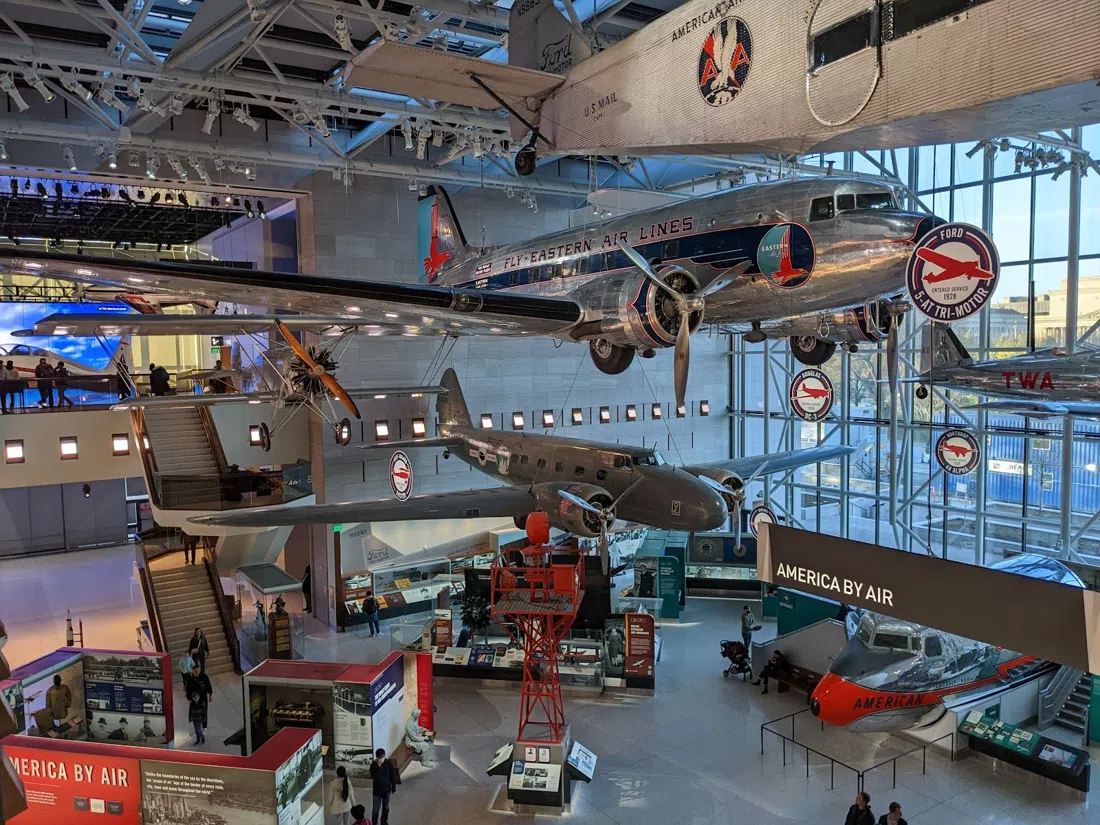
Smithsonian National Air and Space Museum (National Mall) is the one children and engineers cross oceans for, and after seven years of renovation it is finally nearly whole again: five more galleries opened on 1 July 2026, and the last two land on 30 October and 11 November 2026. Check which halls are live the week you travel, because the building has been a moving target for years. Entry is free but needs a timed pass per person, so a party of six books six passes together, and school or tour groups go through the museum's group-visit desk rather than grabbing passes individually. The IMAX and planetarium are the only things you pay for, roughly $9 to $15, and on a first visit I would skip both and spend the time in the galleries.
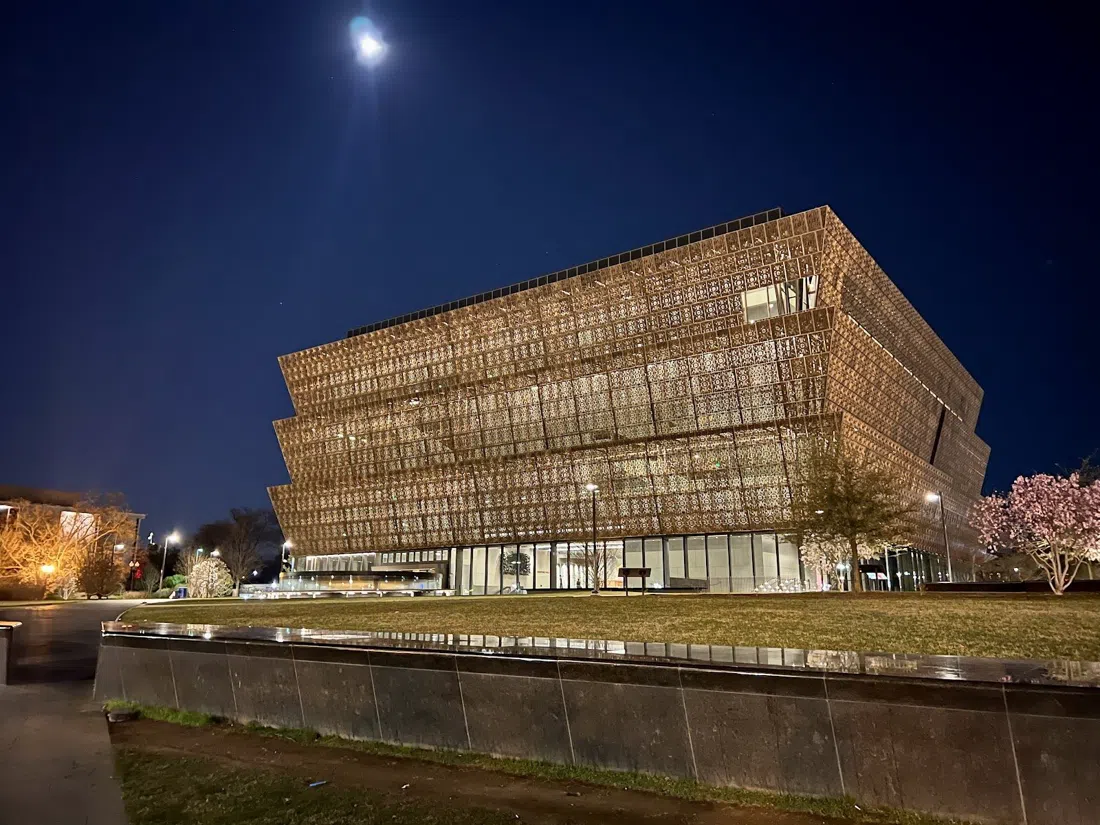
National Museum of African American History and Culture (National Mall) is the most demanding building in the city and the one I would protect most fiercely in a schedule. The history galleries begin three floors below ground and climb upward, chronologically, and you cannot do that in ninety minutes. Three hours is the floor, and I have never left in under four. It does not work as a filler between two other museums, and trying to make it one is the single most common planning mistake I see. From September through February you can usually walk up on a weekday; weekends and peak weeks need timed passes, and a group of any size should book a group pass block rather than turn up together and hope.
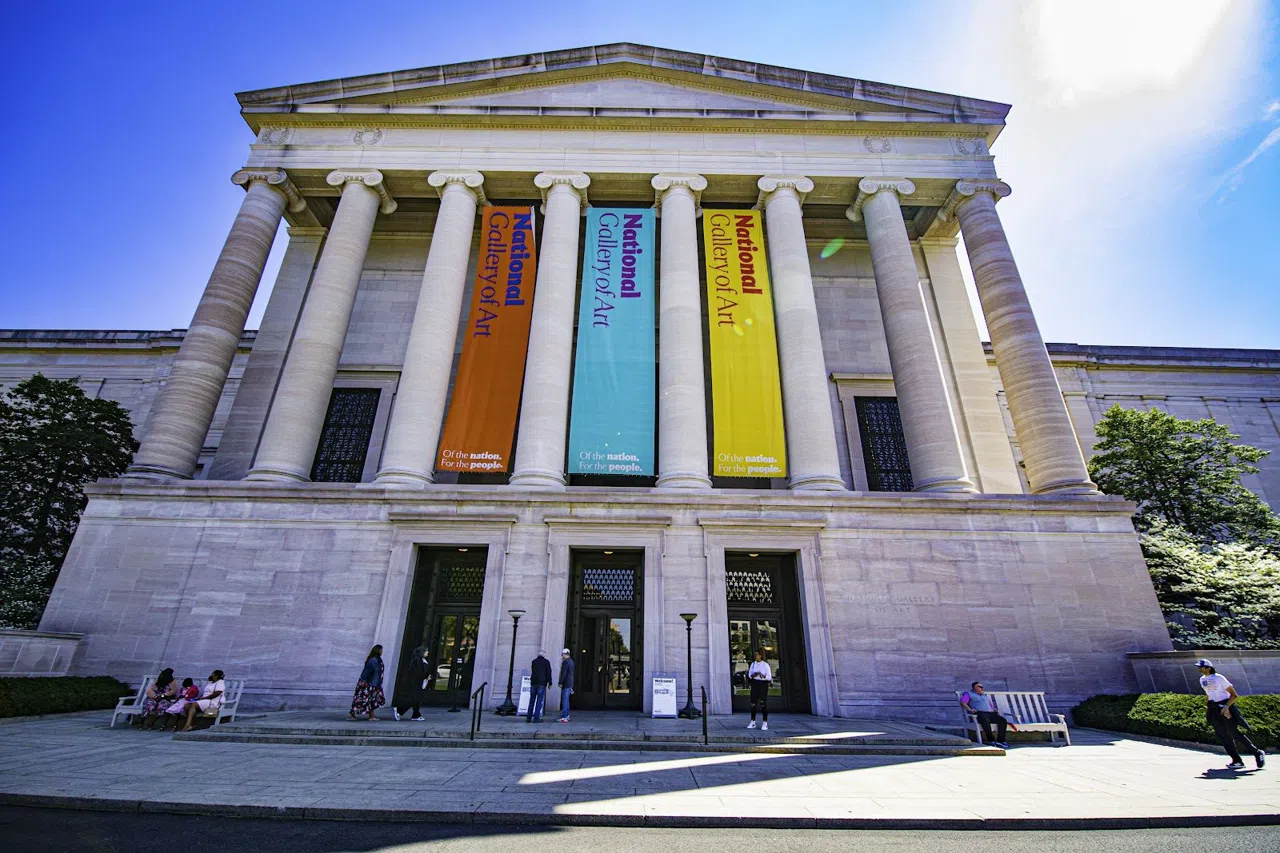
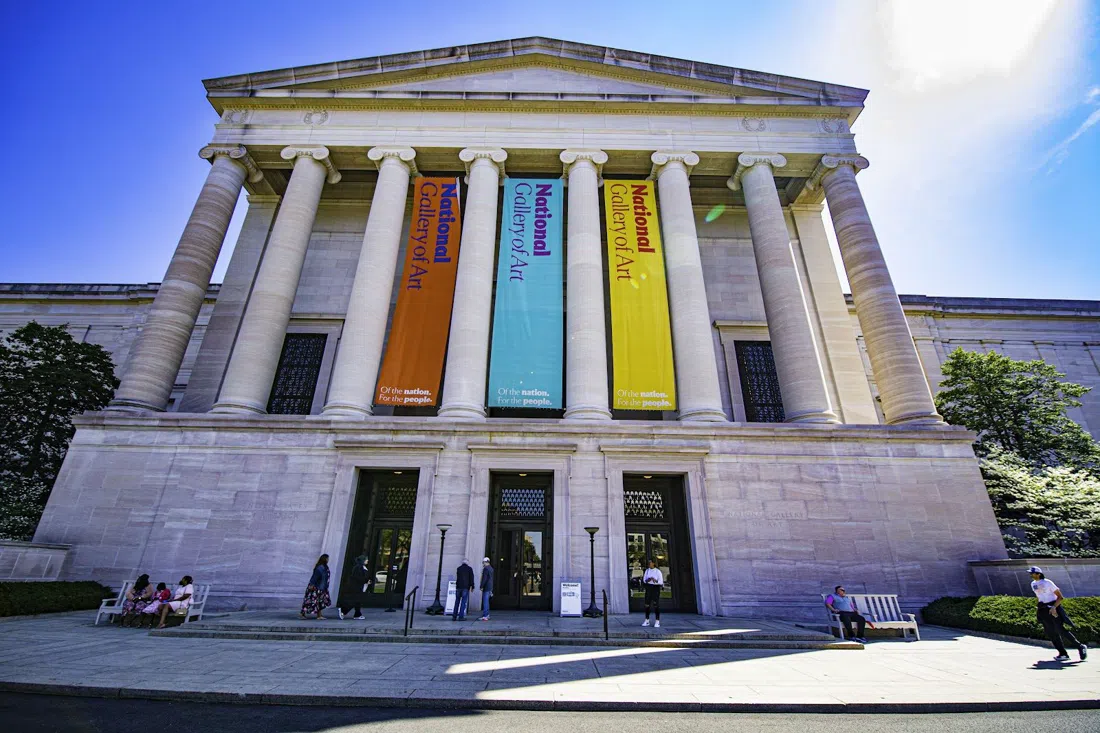
National Gallery of Art (National Mall) is the easiest museum in Washington to fit into a day, because there is nothing to book. You walk in, including for special exhibitions, seven days a week from 10am to 5pm. It holds the only Leonardo painting in the Americas and a full room of Vermeers, which for a visitor with one free afternoon and an appetite for European as well as American work makes it the strongest single art stop in the city. Free guided tours run daily, and a larger party can ask for a docent in advance, worth doing if you are travelling with people who will otherwise drift.
A workable pairing: Air and Space in the morning and the National Gallery after lunch on one day, then give the African American History and Culture museum a whole morning of its own with a deliberately light afternoon behind it.
Penn Quarter is where the museum day is supposed to end
Two blocks north of the Mall the streets narrow, the buildings get older and you can finally sit down. This is where I send people when the Mall has beaten them.
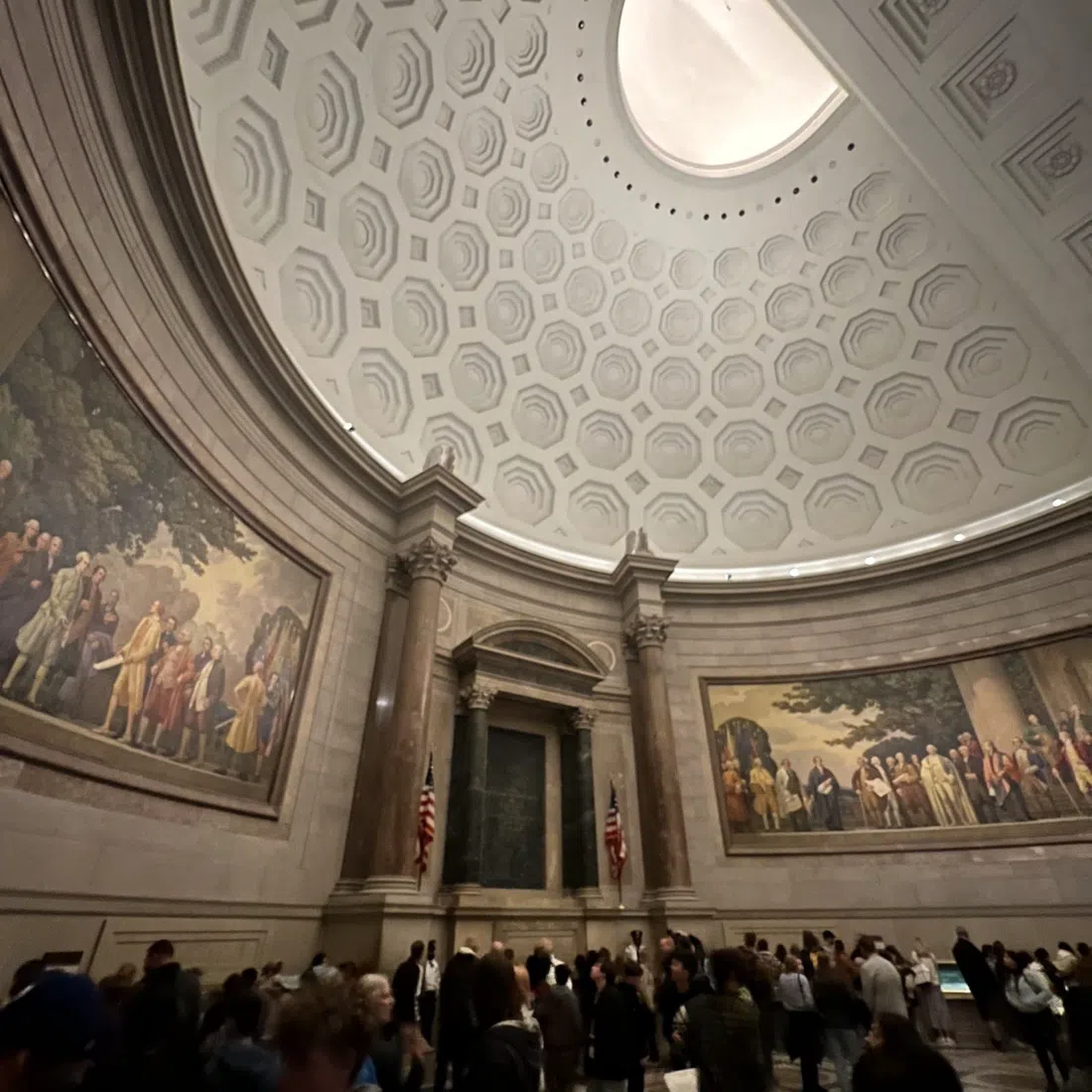
National Archives Museum (Penn Quarter) is the rare Washington stop that is genuinely short. Twenty minutes in the Rotunda with the founding documents is a complete visit, it is open daily 10am to 5:30pm, and entry is free. The queue, though, is real. Pay the $1 for a timed-entry ticket and walk past it, the best dollar you will spend all week. Groups should reserve in peak season rather than improvise.
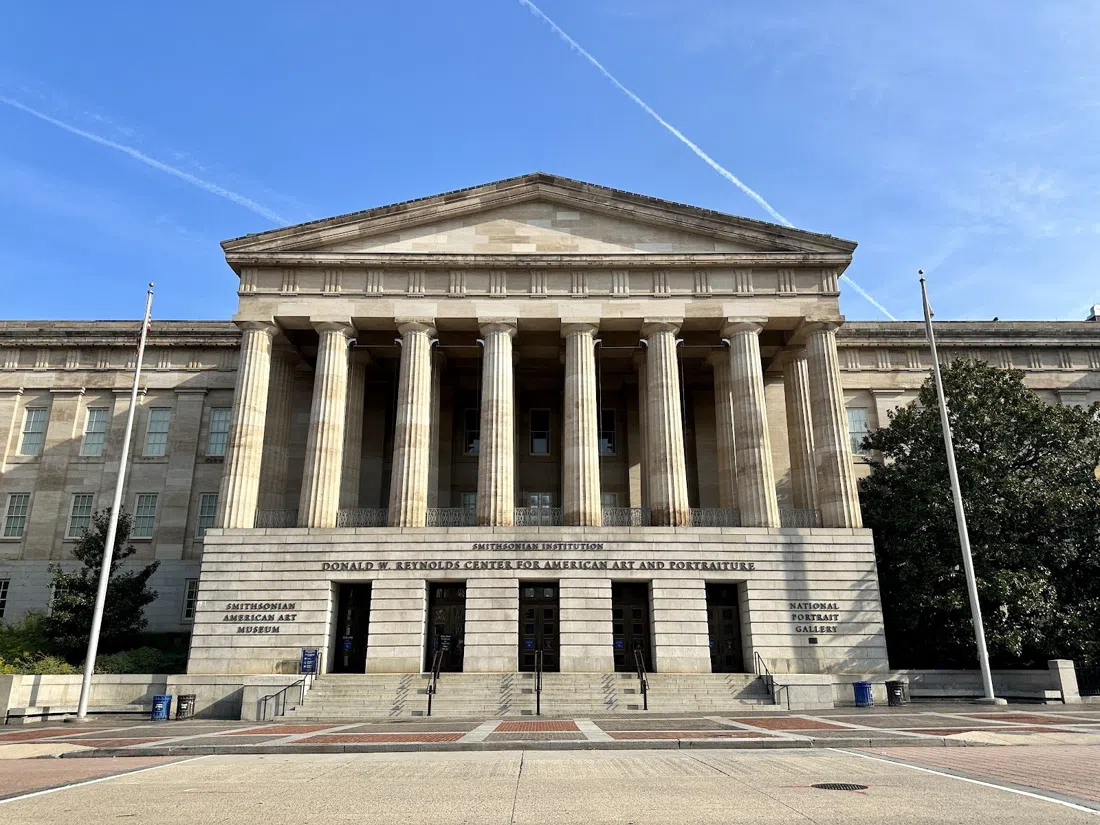
National Portrait Gallery and Smithsonian American Art Museum (Penn Quarter) are two museums sharing one magnificent old building, free, no tickets, and open until 7pm daily, later than anything on the Mall. That late hour is the point: it is the natural stop between a tired afternoon and dinner. The covered courtyard swallows a group of any size and is the meeting point everyone in Penn Quarter defaults to when a party splits up. One honest caveat: the 18th- to early 20th-century American galleries have been closed for refurbishment, with a return due in summer 2026, so confirm they are open before you make them the reason for the visit.
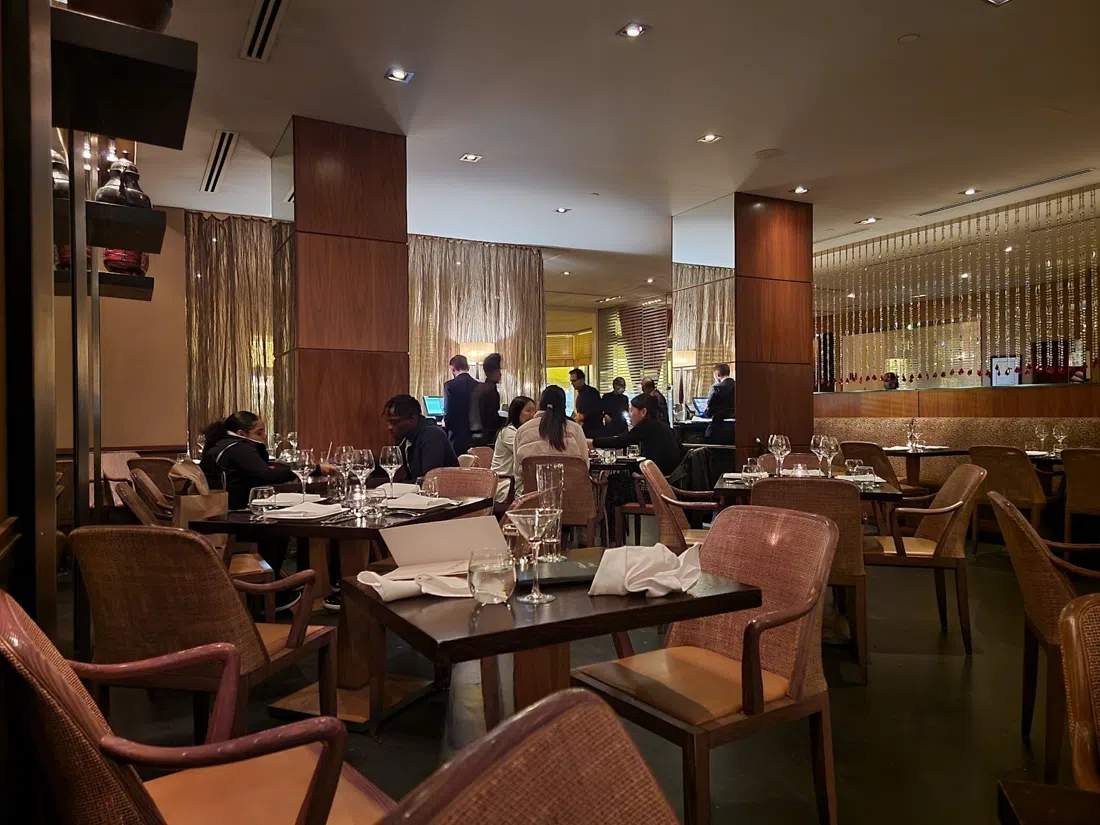
For dinner, Rasika Penn Quarter (Penn Quarter) has been the benchmark for modern Indian cooking here since 2005, and it is two blocks from the National Gallery, which is why it works as a proper end to a museum day rather than a detour. Mains run about $22 to $38. Book on Resy well ahead, not the day before, and know the door rules before you arrive: smart-casual is actually enforced, children under eight are not admitted, and parties of five or more carry an automatic 20% service charge that is apportioned to the staff. None of that is unreasonable; all of it catches people out.
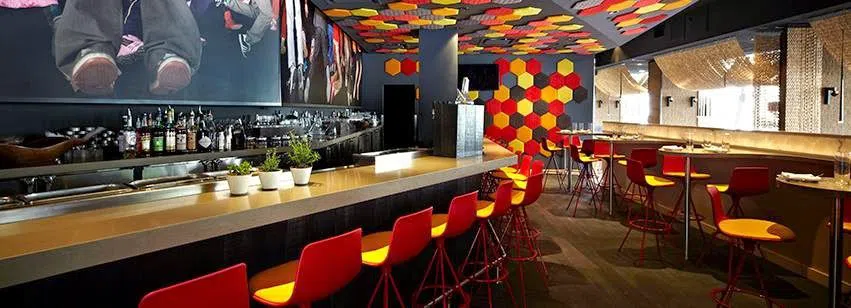
Jaleo (Penn Quarter) is the opposite personality and the better call with a group. It is José Andrés's first restaurant, open since 1993, and the dining room is big enough to absorb a party that turns up without much warning. It runs 11:30am to 10pm, an hour later on Friday and Saturday, so it covers a late lunch as well as dinner, which is genuinely useful when a museum morning overruns into mid-afternoon. Order a paella for the table, from around $50 for two, and build three or four tapas around it at roughly $9 to $18 each. Reservations go through Tock.
Old Ebbitt Grill (Downtown, a block from the White House) is the most reliable large table in the centre of the city and the one I lean on for awkward hours. It is open from 8am to 2am every day, which means breakfast before the Mall and a plate of something after everything else has closed. Mains are about $20 to $40, the oyster happy hour runs 3pm to 5pm, and OpenTable takes bookings for eight and above. Walk in at peak and you will wait a long time; reserve and you will not.
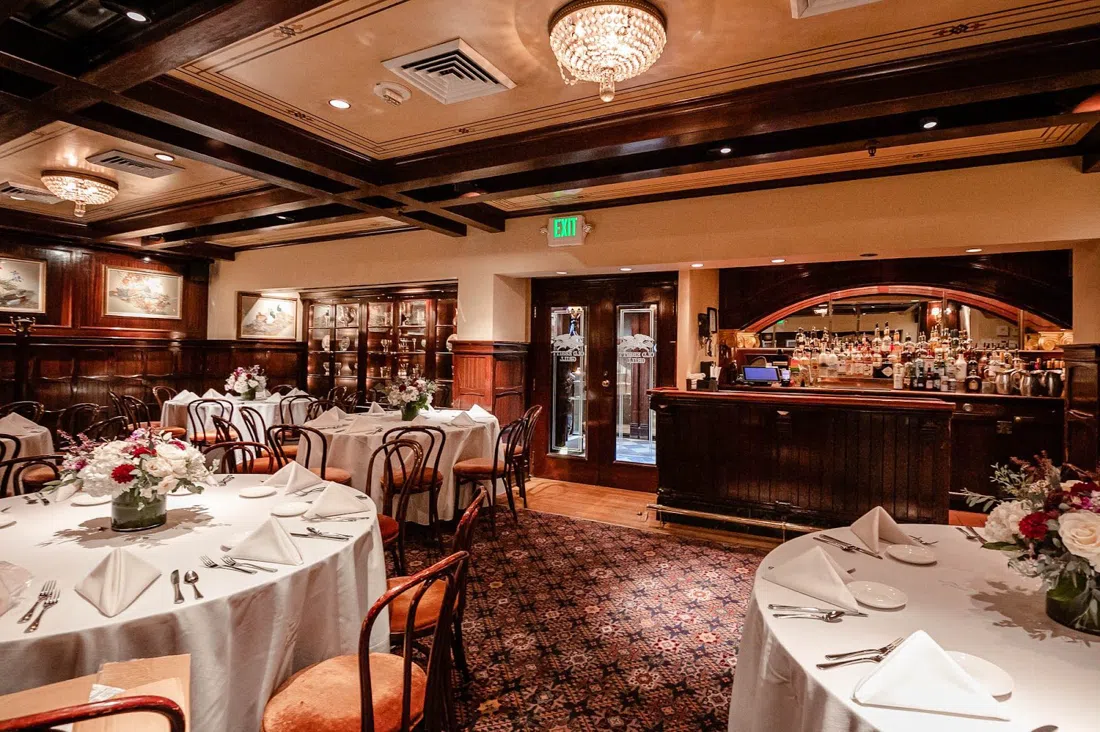
Capitol Hill on a Saturday morning
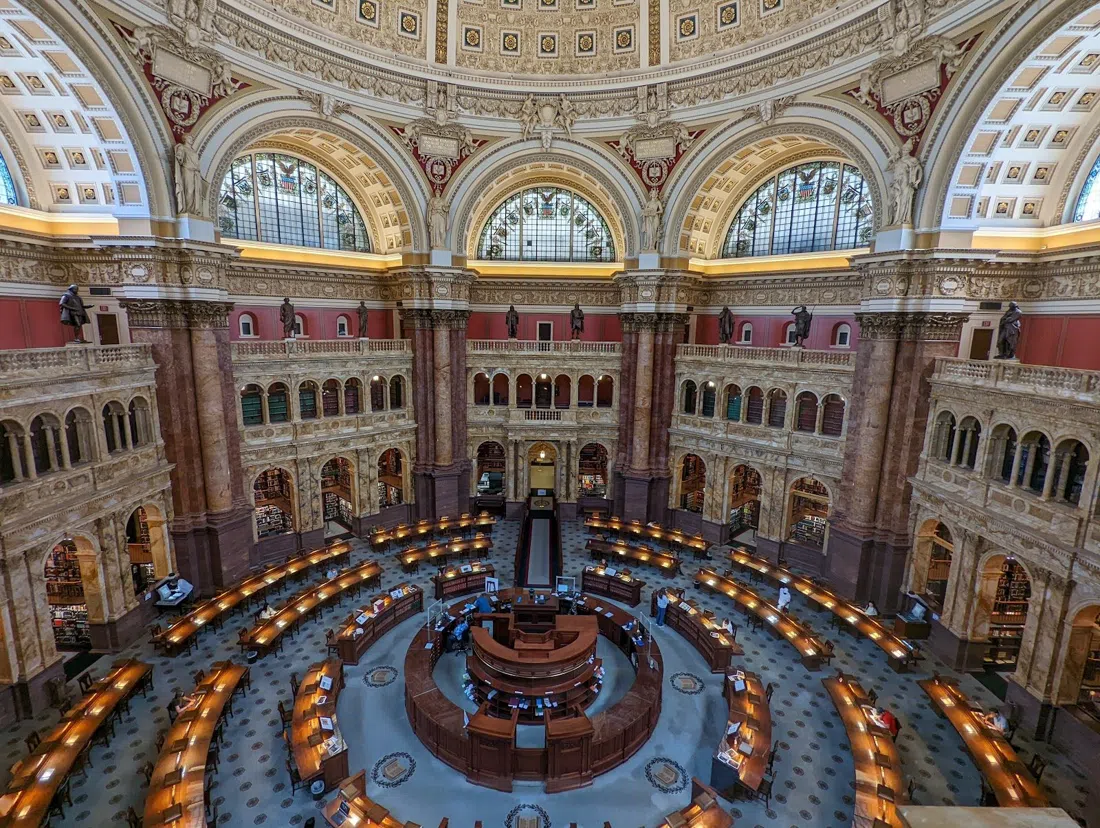
Library of Congress, Thomas Jefferson Building (Capitol Hill) is the most beautiful interior in Washington and still the one first-timers miss. Visitors can now walk onto the floor of the Main Reading Room rather than peer down at it from a gallery, and standing under that dome in the middle of the room is worth rearranging a day for. It is free with a timed pass, open Tuesday to Saturday 10am to 5pm plus Thursday evenings until 8pm. Passes release 30 days ahead, with a same-day batch at 9am, so set an alarm for one or the other. Free guided tours suit two or three people; anything larger should request a group reservation.
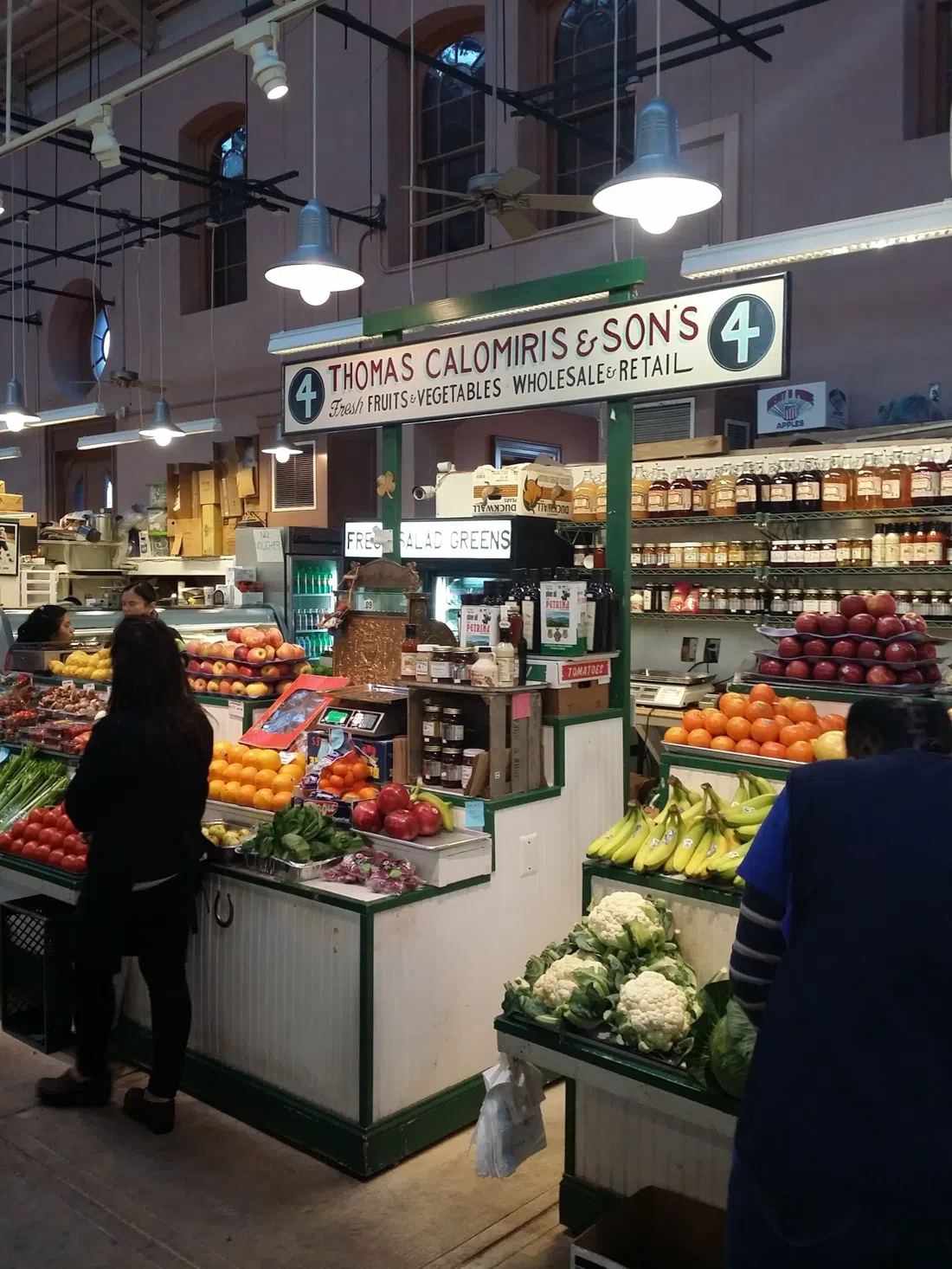
Ten minutes downhill, Eastern Market (Capitol Hill) is the last of Washington's 19th-century public markets still doing the job it was built for. The indoor hall runs Tuesday to Saturday 8am to 6pm and Sunday 8am to 5pm; the outdoor market is Saturday and Sunday 9am to 4pm and Tuesday noon to 4pm. Breakfast or lunch is about $10 to $20 and there is no admission to anything. What you are really coming for is the walk in and out of it: rowhouse streets, front steps, people carrying flowers home. It is the most straightforward way to see Washington as a place people live rather than a set of monuments.
Georgetown at walking pace
Georgetown is a morning, not an afternoon, and it is best on foot with no fixed plan until lunch.
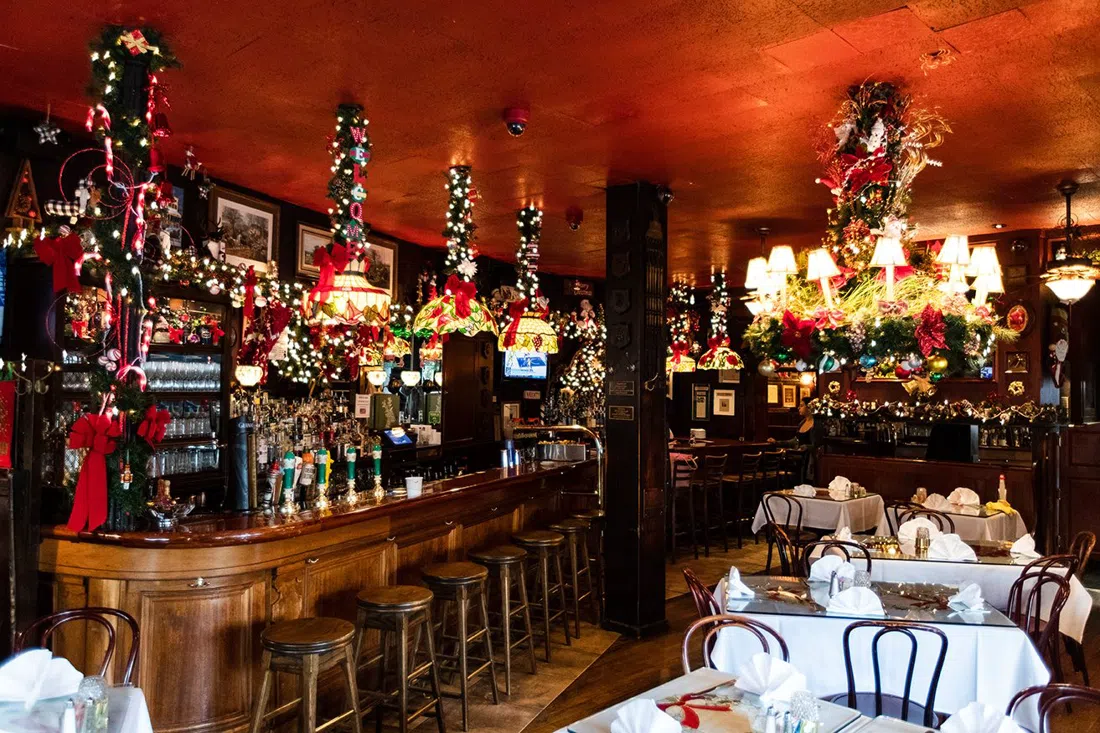
Martin's Tavern (Georgetown) has been open continuously since 1933 and is run by the fourth generation of the same family, which you feel in how the room handles a reunion or a long slow breakfast. Brunch runs until 4pm daily, which makes it the right lunch when the morning has quietly disappeared into the streets. Mains are roughly $20 to $38 and you book through Resy. The famous booths seat four at most, so a group of six will be at a table like everyone else, worth saying out loud before someone gets their hopes up.
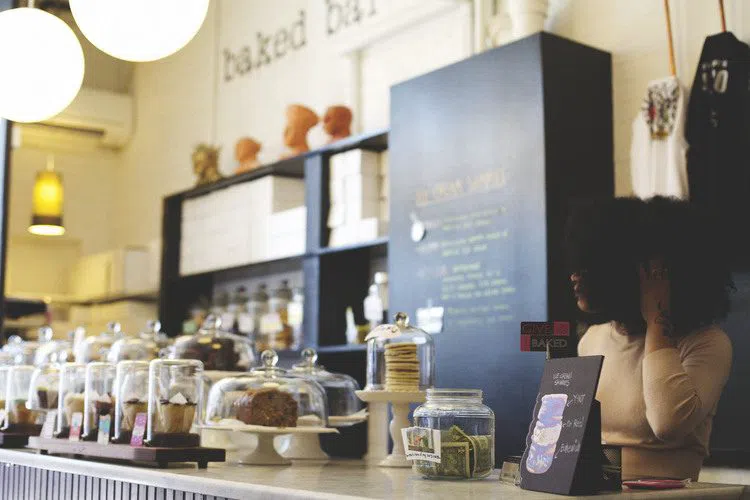
Baked & Wired (Georgetown) has been family-run since 2001 and opens at 8am daily, a block off the canal towpath. A cupcake is about $5 to $6 and coffee $4 to $6, and the queue system confuses everyone the first time: there are two lines, one for bakery and one for coffee, and you join both. Seating is limited, so it suits a group ordering to carry down to the water rather than one hoping to sit together. The canal boat itself is dry-docked until its relaunch in spring 2027, so the towpath walk is the attraction, not the ride.
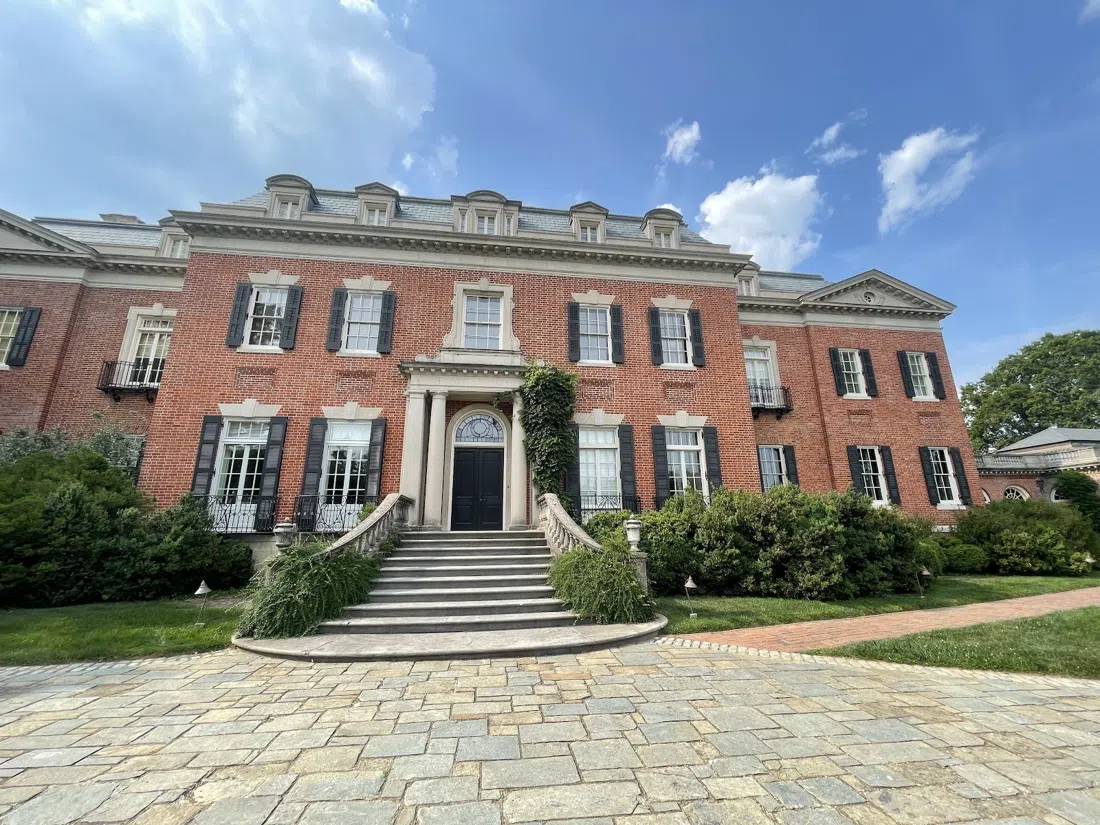
Dumbarton Oaks (Georgetown) is the quietest half-hour in the neighbourhood, and the only thing here that demands planning. The Byzantine and Pre-Columbian collections are free; the gardens charge a modest per-person fee and open Tuesday to Sunday, 2pm to 6pm only, from 1 March to 31 October. Timed tickets must be bought online in advance, never at the gate, and the 2026 season passes are sold out, so buy the individual timed ticket. With the season closing on 31 October, an autumn visitor has a narrow window and an afternoon-only one at that.
U Street after dark
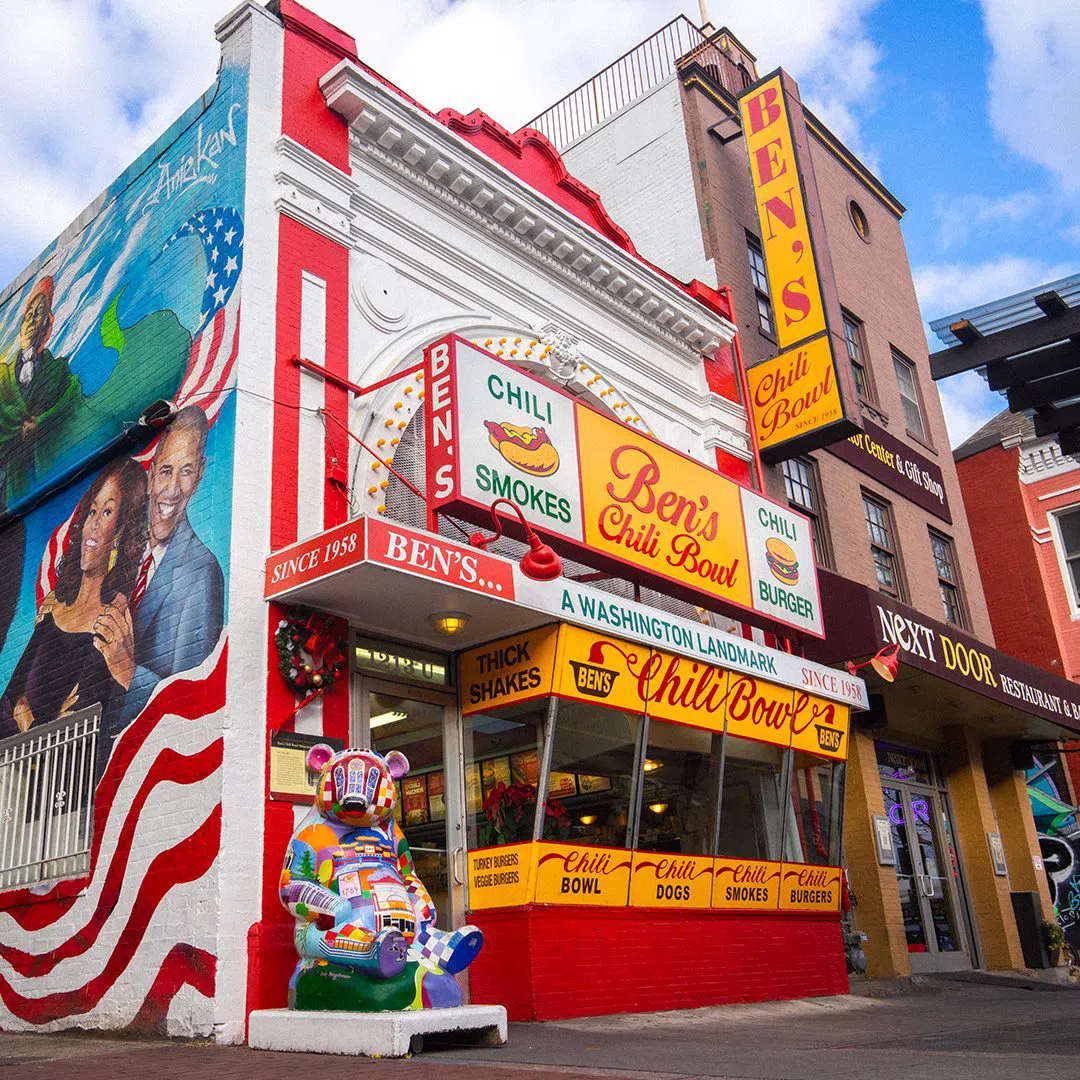
Ben's Chili Bowl (U Street) reopened on 1 May 2026 after nearly ten months closed for structural work on plumbing, wiring and the roof, and the rebuilt room carries a tribute to Virginia Ali, now 92, who has been behind this place since 1958. I have been back several times since it reopened, at different hours, and the half-smoke at around $9 to $12 is exactly what it was: smoky, split, buried in chilli, eaten standing up. It is counter service with no reservations, which is fine for a group willing to queue and hover. It gets busiest after 10pm, and that is when it is most itself.
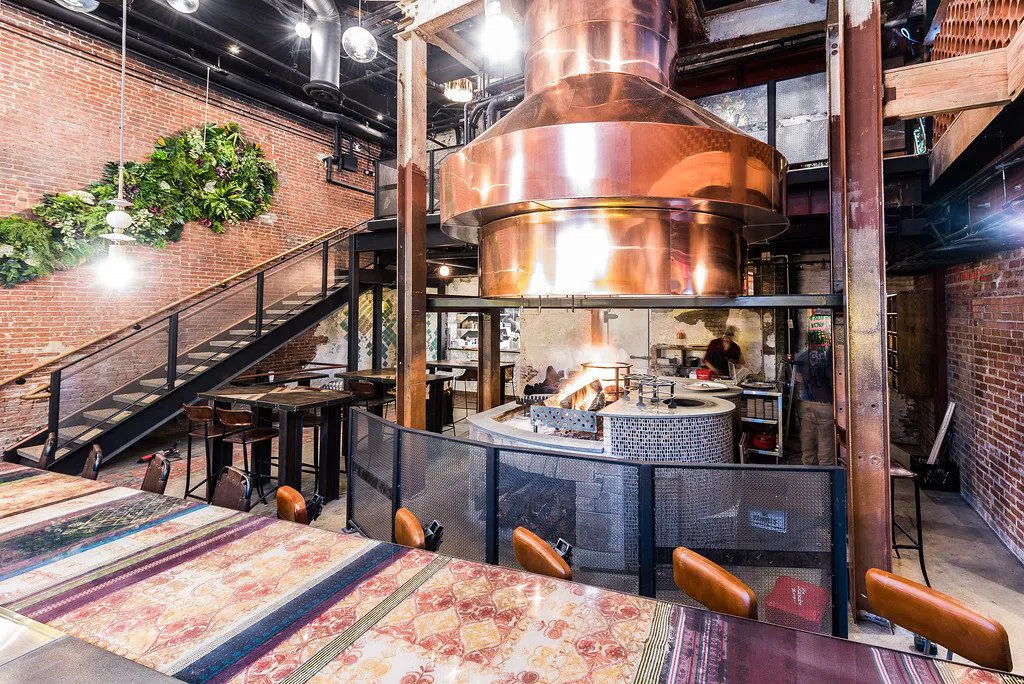
Maydān (Shaw, a ten-minute walk from U Street) is the most atmospheric room in Washington for a table of people who like each other: open fire, smoke, food designed to be torn and passed. The tawle family-style menu runs around $95 per person, and there is à la carte if you want to order lightly. It made Washingtonian's 100 Very Best Restaurants for 2026; it also lost its Michelin star in the 2024 guide, which I mention only so you judge it on the fire rather than the badge, because the cooking has not stopped being worth the walk. Reservations open 45 days ahead and disappear quickly, so larger parties should call the restaurant directly instead of fighting the booking page.
A wet afternoon that is not a wasted one
Planet Word (Downtown, near Franklin Square) is the best bad-weather alternative to the Mall and the most genuinely international museum in the city, because every gallery is voice-activated and multilingual, which means a visitor whose first language is not English is not a second-class guest for once. Entry is free with a reserved pass and a donation is suggested. It is closed Tuesdays, which catches out more people than any other opening rule in Washington. Groups of 20 to 80 must book a group visit at least five weeks ahead and do pay: $300 for 20 to 35, $480 for 36 to 60, $800 for 61 to 80, plus a $25 fee. Smaller parties simply reserve free passes.
Getting around, paying and timing
The Metro does the heavy lifting between neighbourhoods and is clean, frequent enough and easy to pay for with a contactless card or phone, so you never need a ticket machine. Within a neighbourhood, walk. Between Penn Quarter, the Archives and the Mall you are talking five to ten minutes on foot; Georgetown has no Metro station of its own, so allow a bus or a rideshare and a short walk at the end.
Cash is essentially optional, since every venue here takes cards, but tipping is not. Around 20% is the standing expectation in sit-down restaurants, and where a service charge is already applied, as at Rasika for parties of five or more, it is stated on the bill rather than added again.
On budget: the museums being free changes the shape of the trip entirely. A day of museums costs you a $1 Archives ticket and lunch. That means the money lands on food, and it should. Plan on roughly $15 to $25 a head for a market or counter lunch and $50 to $110 for a real dinner with a drink, more at Maydān's tawle. For where to sleep, Penn Quarter puts you inside walking distance of most of this, Capitol Hill is quieter and more residential, and Georgetown is the prettiest and the least connected; compare rates and locations through Washington hotel search, and the wider Washington guide covers the rest of the city beyond a first visit.
On timing: spring and autumn are the comfortable months, summer on the Mall is genuinely punishing, and winter has the quiet advantage of weekday walk-up entry at the African American History and Culture museum from September through February. Whatever month you pick, book the Library of Congress pass 30 days out, the Dumbarton Oaks ticket before you leave home, and dinner at Rasika or Maydān the moment your dates are fixed. Everything else in this city you can decide on the morning.