
Washington spends its daylight hours photographed at the Mall — marble, reflecting pools, and the long approach to obelisks and domes. But walk two miles north after dark and the register changes completely: horn sections drifting out of a theater doorway, injera passed hand to hand around a communal table, a rooftop crowded on a Tuesday because a show just let out three blocks over. This is the Washington that outlasts the itinerary — Shaw, Petworth, H Street NE, and the U Street corridor, where the capital's real culture has been quietly compounding for decades, largely ignored by anyone whose visit ends at the Mall.
U Street: Where Ethiopian DC Never Left
U Street NW was Black Broadway before it was anything else — Duke Ellington played here as a teenager, and the corridor between 9th and 16th Streets carried the weight of Washington's Black cultural and commercial life through the first half of the 20th century. It burned in the 1968 riots, hollowed out for a generation, and came back changed: part music strip, part restaurant row, still legible as the same street if you know where to look.
Start with Ben's Chili Bowl (U Street), the half-smoke counter that's been feeding DC since 1958. It reopened at its original address, 1213 U St NW, in May 2026 after repairs — worth noting, because for a stretch it was running out of a pop-up across the street, and visitors sometimes still get pointed to the wrong storefront. It's counter-service, no reservations, and genuinely easy for a group to walk into and grab a table; expect $ per head and paper napkins, not white tablecloths.
Ethiopian food is the other backbone of U Street, and it's a more interesting story than "good restaurant." Most of the DC region's Ethiopian community relocated to the suburbs years ago, chasing rent that U Street itself long since priced out. Dukem Ethiopian Restaurant (U Street) is the holdout: the longest continuously running Ethiopian landmark still on the street itself, with big communal tables built for groups and no door policy to navigate. Expect $$, sharing platters, and injera doing the work of cutlery.
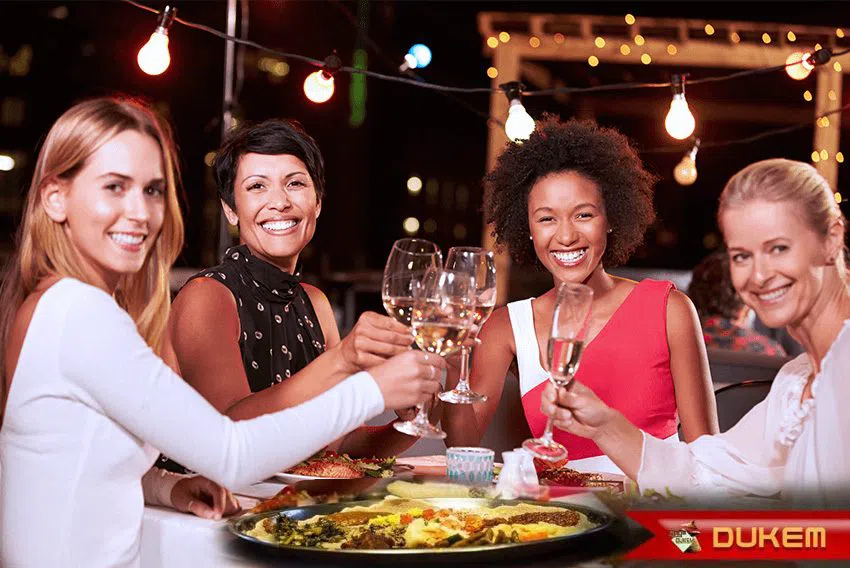
For a newer, sharper take on the same cuisine, Eatopia Eatery (U Street) is the upscale counterpoint — reservation-friendly, still built around communal tables, running $$–$$$. Put the two side by side and you get the real story: Ethiopian food on U Street isn't a relic, it's still evolving.
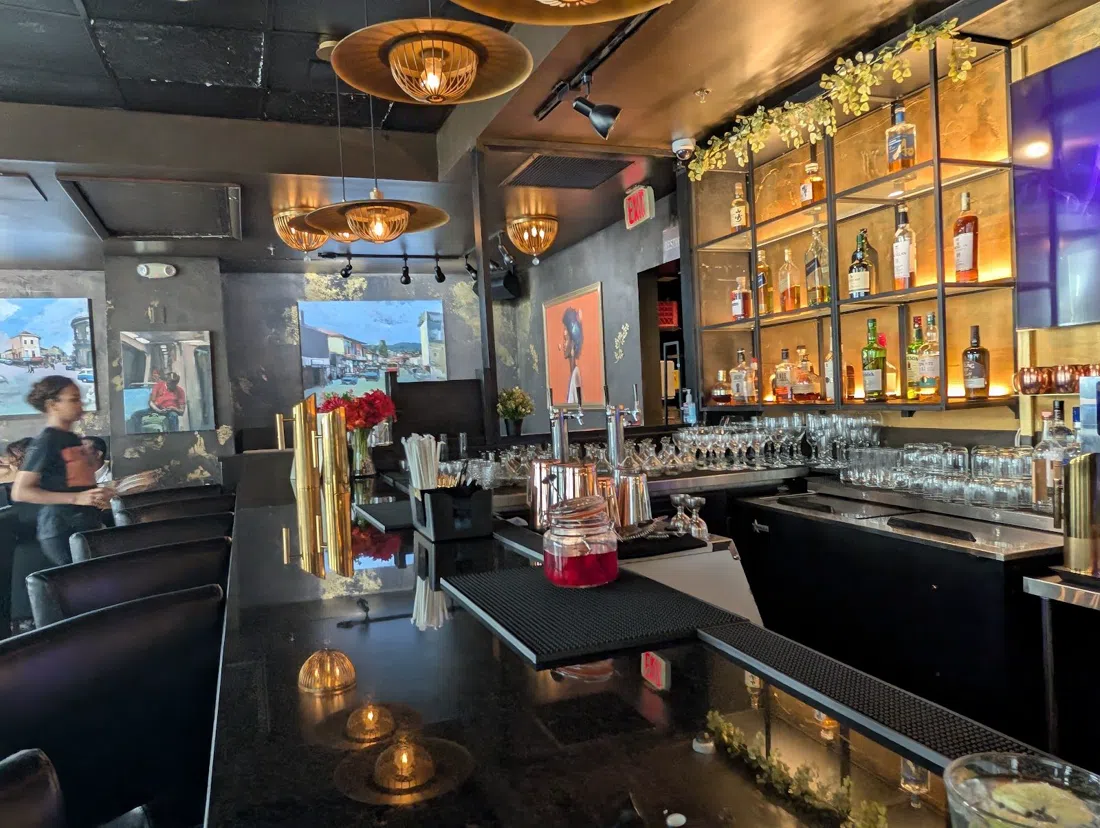
Music is the other reason to linger. The Lincoln Theatre (U Street), a restored 1920s movie palace turned concert hall, hosted the actual Go-Go 50th-anniversary awards show in 2026 — as close to a dated, verifiable anchor as this street offers for its own musical importance. It's a seated venue, so book ahead for a group rather than turning up. A few blocks over, the 9:30 Club (U Street) is the nationally known name — a standing-room club with a packed 2026 calendar and no bottle-service nonsense to work around; buy tickets in advance and expect to stand for the whole set.


Shaw: The Sound That Won't Be Quiet
Shaw sits just west of U Street and carries the deepest go-go roots in the city — go-go being the percussion-heavy, call-and-response funk hybrid that Chuck Brown invented in DC in the 1970s and that, unlike almost every other regional American music, never crossed over nationally. It didn't need to: it stayed the city's own soundtrack, and Shaw is where you can still hear why people fought to keep it.
The Howard Theatre (Shaw) is the definitive stop — a historic venue with genuine, checkable roots in go-go and in Black Broadway more broadly, still running ticketed shows with a general-admission floor that works fine for a group. Expect $$ and a night built around whoever's booked, not a fixed "experience."

A few minutes' walk away sits the MetroPCS corner — officially renamed Chuck Brown Way — at Florida Avenue and 7th Street NW. It isn't a bar or a restaurant, and there's nothing to book: it's a public corner, free to visit, and its story matters more than its appearance. For years the MetroPCS store there played go-go out onto the street, the way corner stores across the city once did as a matter of course, until a new resident's noise complaints in 2019 sparked the "Don't Mute DC" movement — a real, citywide pushback that kept the music legal and audible. Treat it as a five-minute stop with the history told alongside it, not a destination in its own right.
For something calmer, Dacha Beer Garden (Shaw) is the neighborhood's answer to the rooftop-bar scene a few blocks over: outdoor, communal picnic-table seating, dog- and family-friendly, no dress code and nothing to reserve. It's the honest counterpoint to everywhere else in this piece that runs on group bookings and door lists.
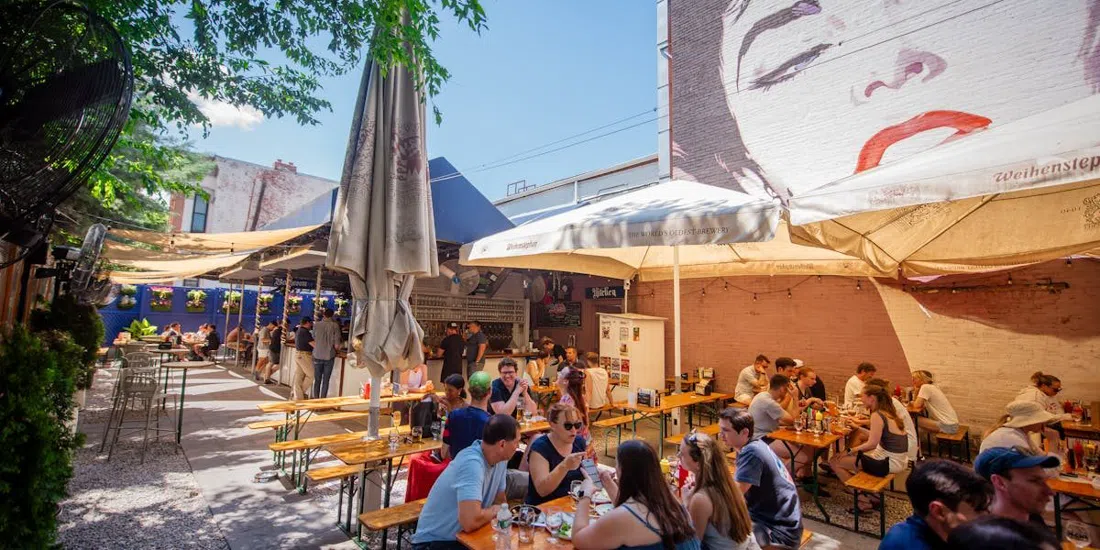
And right on the seam between Shaw and U Street, TAKODA (Shaw/U Street) is a rooftop beer garden explicitly built for groups — the venue quotes party sizes from 20 up to 200, with first-come seating outside of that. Its view genuinely straddles both neighborhoods this piece is about, which is a decent metaphor for the area generally: the line between Shaw and U Street is more administrative than felt on the ground.
H Street NE: The Atlas District's Second Act
H Street NE — sometimes called the Atlas District, after the historic theater anchoring it — is the newest of the four neighborhoods here, and the one with the least Metro convenience, which is part of why it still feels less discovered than U Street.
Ethiopic (H Street) does for this stretch what Dukem does for U Street, though with a different logistics profile: it takes reservations for groups and is a genuine pre-theatre stop for the Atlas District's live venues, running $$. It's worth booking specifically because it sits within walking distance of most of H Street's evening options.

Toki Underground (H Street) is the street's best-known restaurant-as-culture-signal — a small, packed ramen bar that's gone reservation-only as of 2026. That's a real logistics note, not a style choice: walk-ins are not a safe plan here, so book ahead if a group wants a table, especially on a weekend. Expect $$.
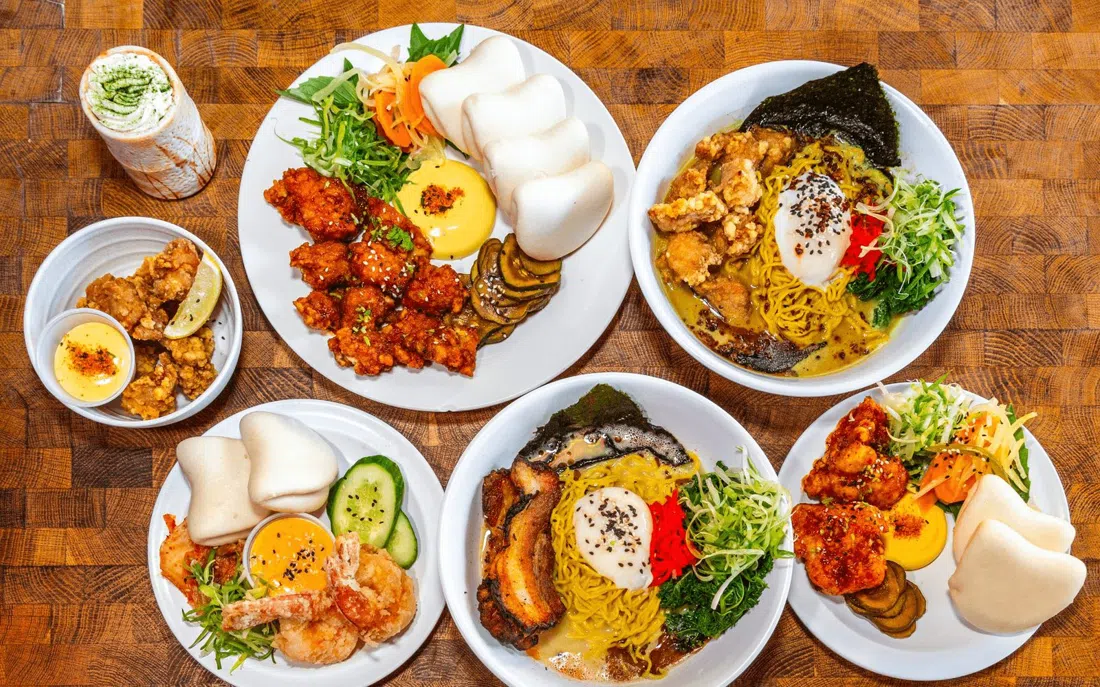
Copycat Co (H Street) is the most visually distinctive stop on the strip — a dumpling counter downstairs with a serious cocktail lounge upstairs, and the upstairs room takes group bookings for cocktails. Running $$–$$$, it's a good split-the-group option: dumplings for whoever wants dinner, cocktails upstairs for whoever's staying out.
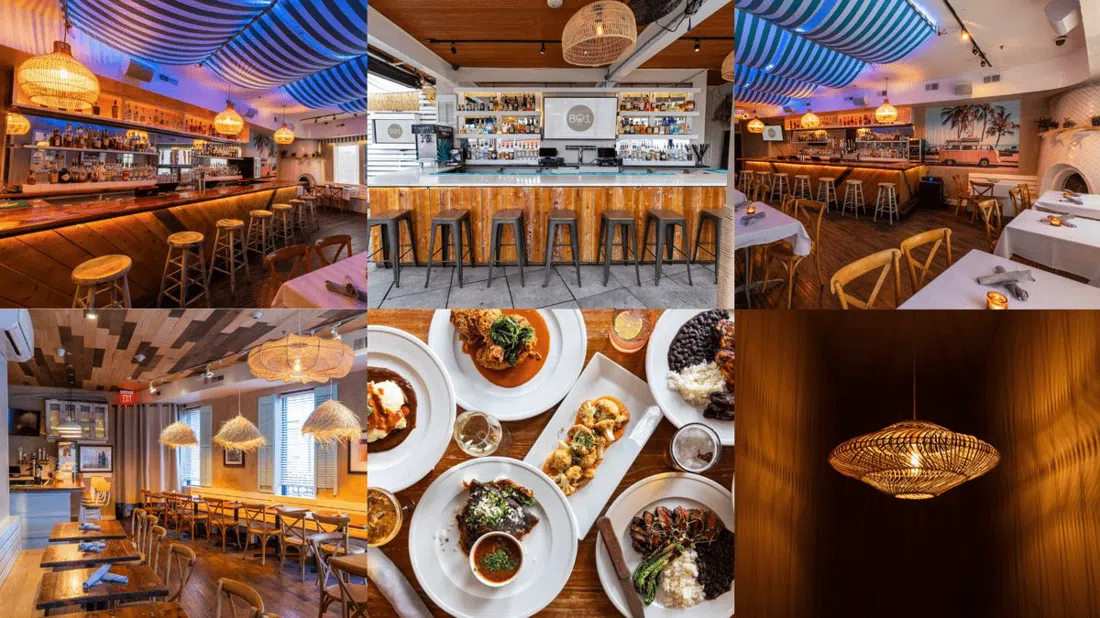
For late-night, Techo Palma (H Street) is the rooftop to know — it reopened under new ownership and its current name on Cinco de Mayo 2026, after the previous rooftop at the same address, El Techo, closed. Use the current name; some maps and older reviews still reference the old one. DJs and late hours make it a genuine weekend-night option, running $$–$$$, and the rooftop format lends itself to groups or a full buyout if you're organized enough to ask ahead.

Rounding out H Street's rooftop scene, 801 Restaurant & Bar (H Street) runs on "good vibes only" branding and large-format, shareable drinks built for groups rather than couples — a playful, unpretentious pick at $$ if the rest of the strip feels too self-serious.
Petworth: The Neighborhood That Isn't Performing for Anyone
Petworth, further north past Columbia Heights, doesn't have a nightlife strip or a music legacy to sell — it's a residential neighborhood that happens to have produced two genuinely good, low-key places worth the trip, both clustered around Park View.
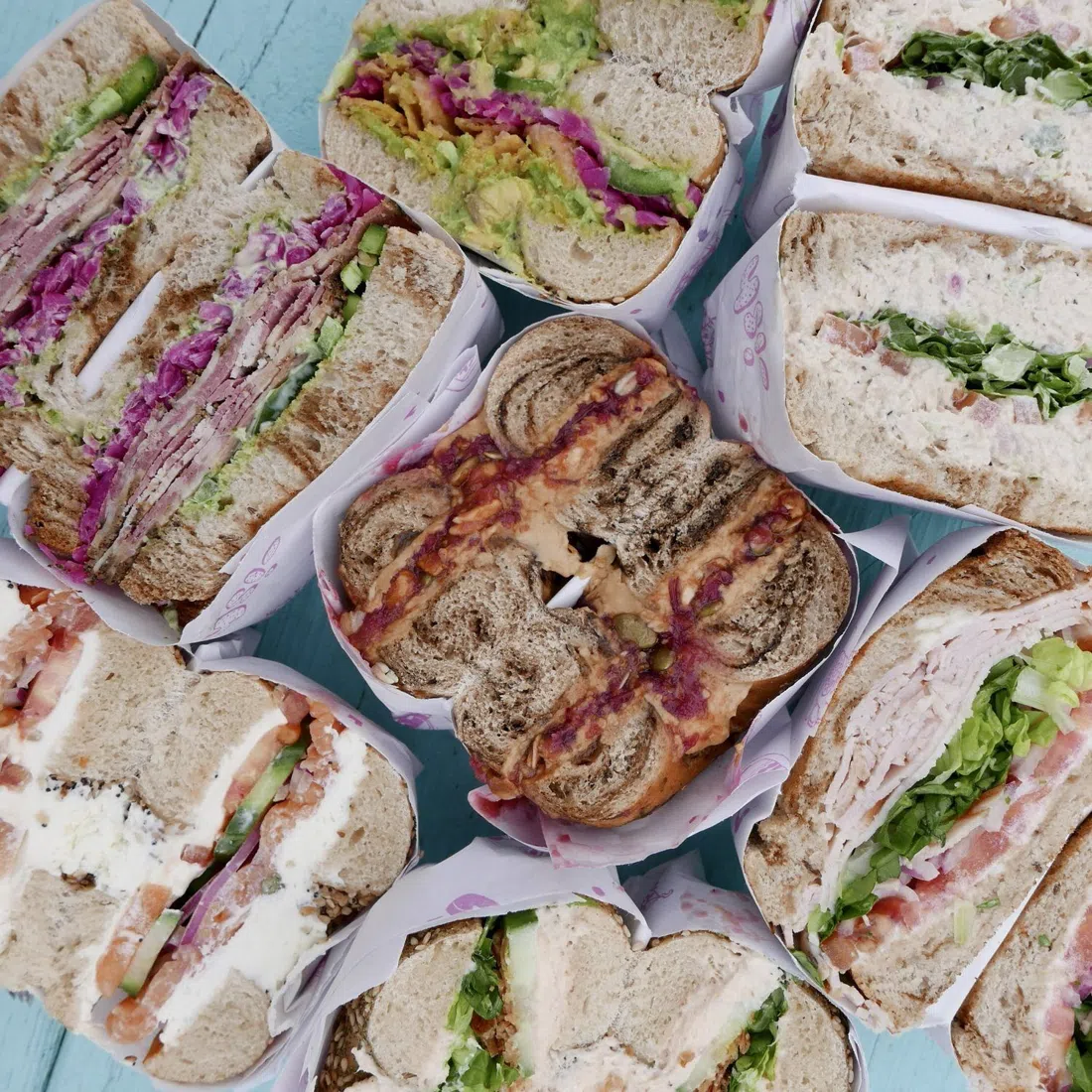
Call Your Mother Deli (Park View/Petworth) is the original location of what's now DC's most-hyped bagel brand — it's expanded citywide since, but this is where it started, and it's still just counter-service bagels at $, fine for a group grabbing breakfast before a walk. No reservations, no fuss.
A block or two on, Timber Pizza Co (Petworth) is the neighborhood's home-grown pizza spot — casual sit-down, no reservations needed, $$, and genuinely distinct from Slash Run, the bar that used to sit down the block and has since closed. If a local recommends "the pizza place on Georgia Avenue," this is almost certainly it.
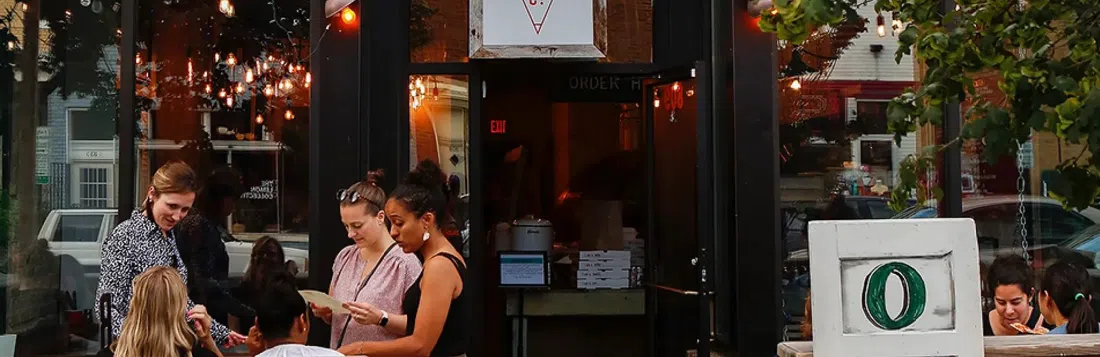
Petworth won't fill an evening on its own, but it's the right stop for a slower morning between the more intense nights of U Street, Shaw, and H Street — proof that DC's actual neighborhoods don't all need a door policy to be worth visiting.
Planning the Route
These four neighborhoods aren't a single walkable loop — U Street and Shaw sit close enough to combine in one night, but H Street NE is a genuine trip east, and Petworth is a separate excursion north. Treat them as two or three distinct outings rather than one long crawl, and book the reservation-required stops (Eatopia Eatery, Ethiopic, Toki Underground, and any group room at Copycat Co) before you land, not on the day.
For sleeping near any of it, a Washington hotel search turns up options closer to U Street and Shaw than to the Mall hotels most itineraries default to — worth checking before assuming downtown is the only base. And for the rest of the city beyond this piece, the full Washington guide covers the monuments this one deliberately skipped.
Practical Details
Getting there: U Street/African-American Civil War Memorial/Cardozo Metro station (Green/Yellow) puts you on U Street directly; Shaw-Howard University station, one stop south, covers Shaw and the Howard Theatre. Neither line reaches H Street NE — it's a streetcar (free) or bus from Union Station, or a short rideshare from downtown, generally $10–15. Petworth has its own Green/Yellow Line station.
Cash: Washington runs on cards almost everywhere in this piece; carrying cash is a backup, not a requirement, though a few counter-service spots move faster with exact change.
Timing: Ben's Chili Bowl, Dukem, Call Your Mother, and Timber Pizza are walk-in-friendly any time they're open. Everything else with a reservation line above — Eatopia Eatery, Ethiopic, Toki Underground, group rooms at Copycat Co — should be booked ahead, especially for a weekend group of four or more. Concert and theater tickets (9:30 Club, Howard Theatre, Lincoln Theatre) go on sale separately from the door and sell out for known acts, so buy early rather than hoping to walk up.
Budget: Expect $15–25 a head for counter-service meals (Ben's, Call Your Mother, Timber Pizza), $25–45 for a sit-down Ethiopian dinner, and $15–20 cocktails at the rooftop bars, before any ticketed show. A full night combining dinner, a show, and a rooftop easily runs $80–120 a person — less if you stick to one neighborhood rather than moving between all four.