The Washington issue
Georgetown, Washington D.C.: A Neighbourhood Feature on Wisconsin Avenue's Waterfront Past and Present
Georgetown is Washington's oldest neighbourhood, a Federal-era river port turned boutique-and-waterfront quarter where the C&O Canal still sets the pace.
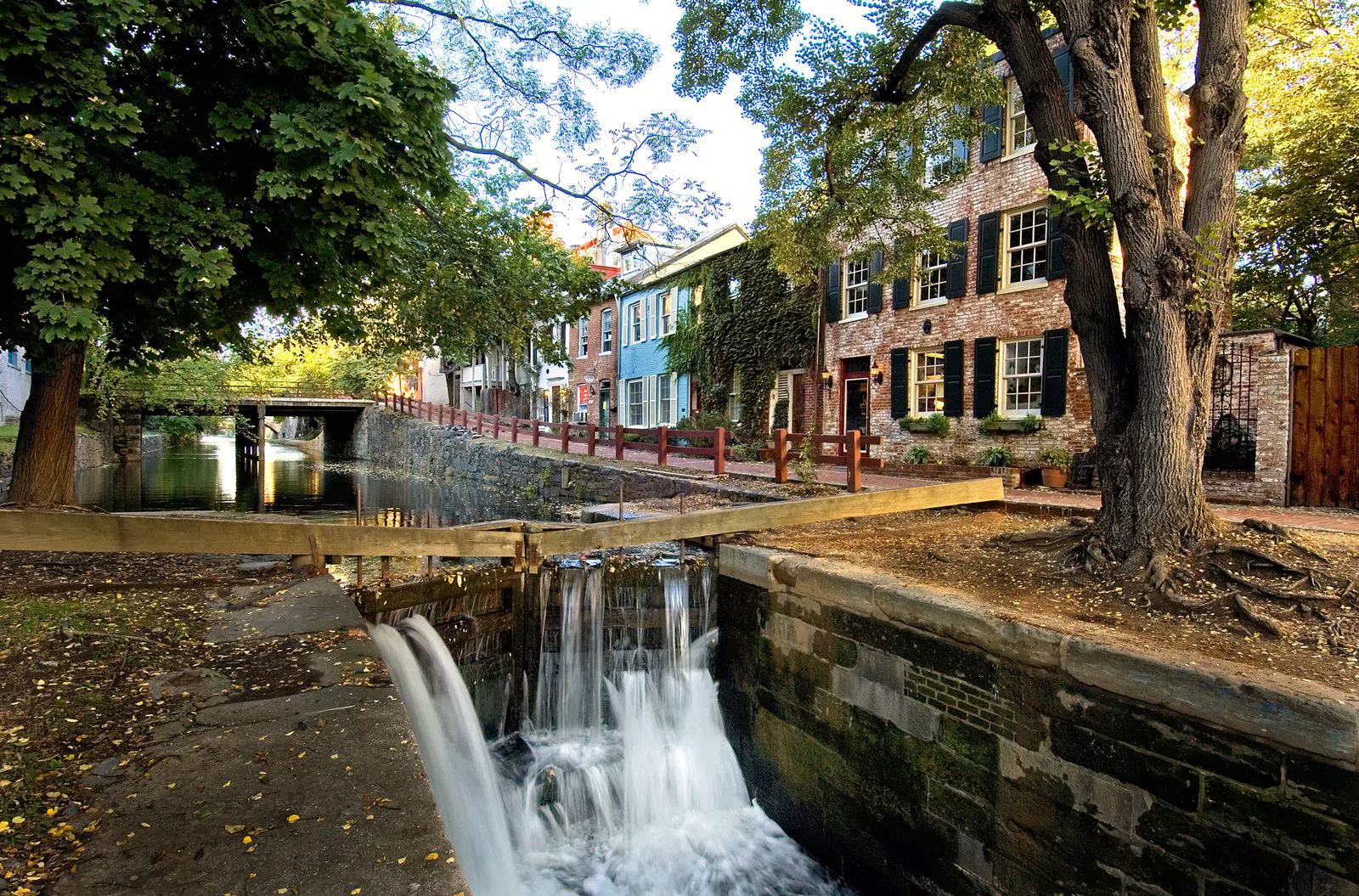
Wisconsin Avenue leaves the rest of Washington behind almost immediately, tipping downhill past red-brick Federal rowhouses on its run to the Potomac, where the C&O Canal's towpath lies mule-track flat between Georgetown University's front gate and the harbor. This is the oldest developed patch of the capital — a Maryland tobacco port that predates the federal city carved out of the swampland to its east — and it has never quite let go of that older, separate identity. Walk down from the ridge above M Street and you feel the grade in your calves before you feel the history in the brick underfoot, but both arrive by the time you reach the water.
What Georgetown is known for
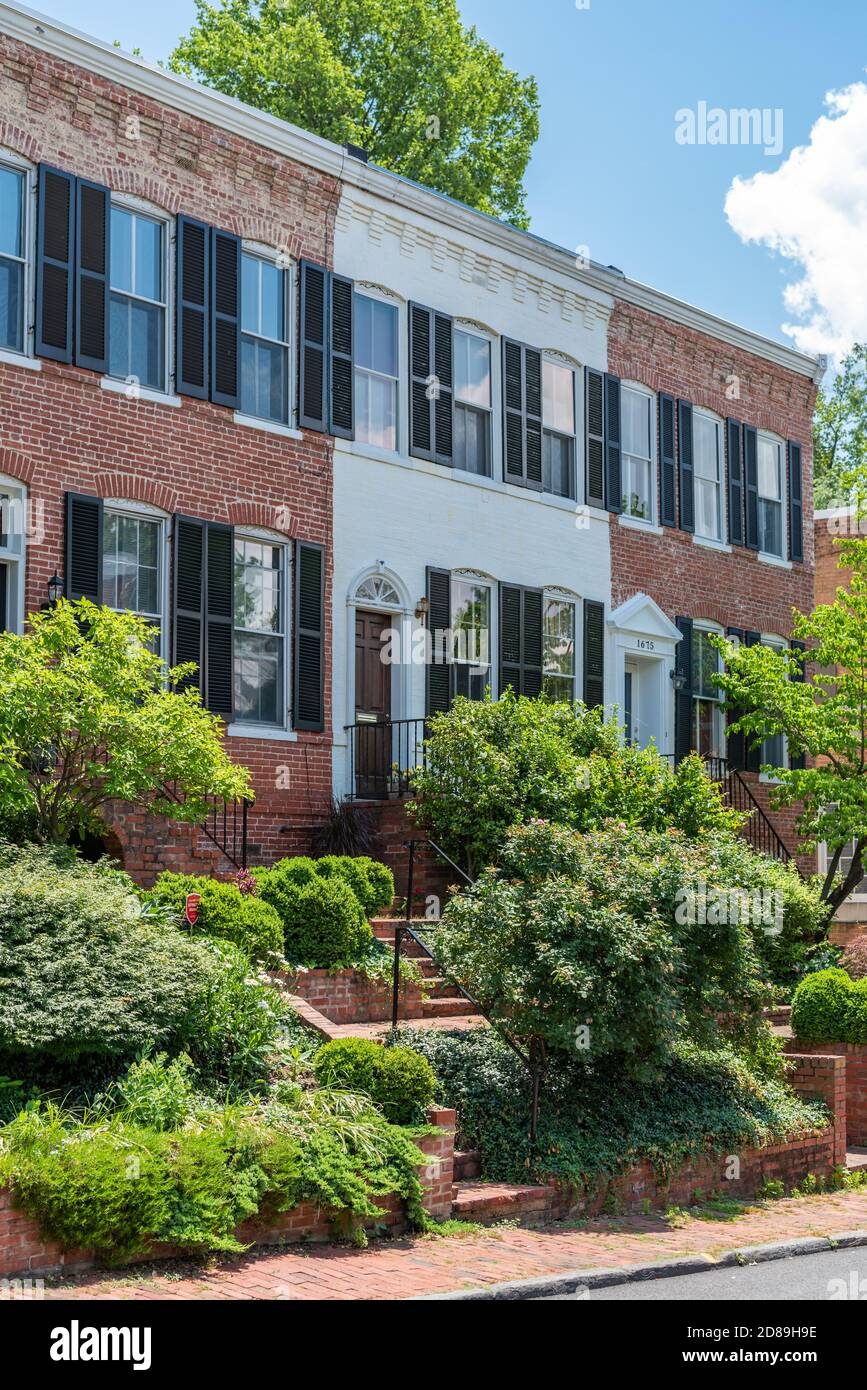
Georgetown predates Washington, D.C. itself, and it wears that fact plainly. The core of the neighbourhood is a tight grid of Federal and Victorian rowhouses on brick sidewalks, laid down when this was still an independent tobacco port on the Potomac rather than a ward of the new federal city taking shape to the east. That double identity is still legible on the ground: Georgetown reads as two neighbourhoods stacked on a hill. Up top, along M Street and Wisconsin Avenue, it runs as a shopping strip — Lululemon and Sephora slotted into Federal-era storefronts, Georgetown University students in backpacks cutting between lecture halls and the shopping crowd, sidewalks narrow and brick and crowded by early evening. Down at the bottom, along the canal and the river, it slows into something closer to a historic village, the pace set by dog walkers and joggers on the towpath rather than shoppers. The combination is the whole appeal and the whole friction of the place: a neighbourhood couples come to for a romantic waterfront dinner, shoppers come to for a walkable boutique-dense strip, and history buffs come to for the Federal-era architecture and the canal, but not somewhere a budget traveller or a Metro-dependent visitor is likely to love.
Plan your Washington trip
Live prices from our booking partners.
Free cancellation on many rooms. We may earn a commission when you book.
Where to eat and drink
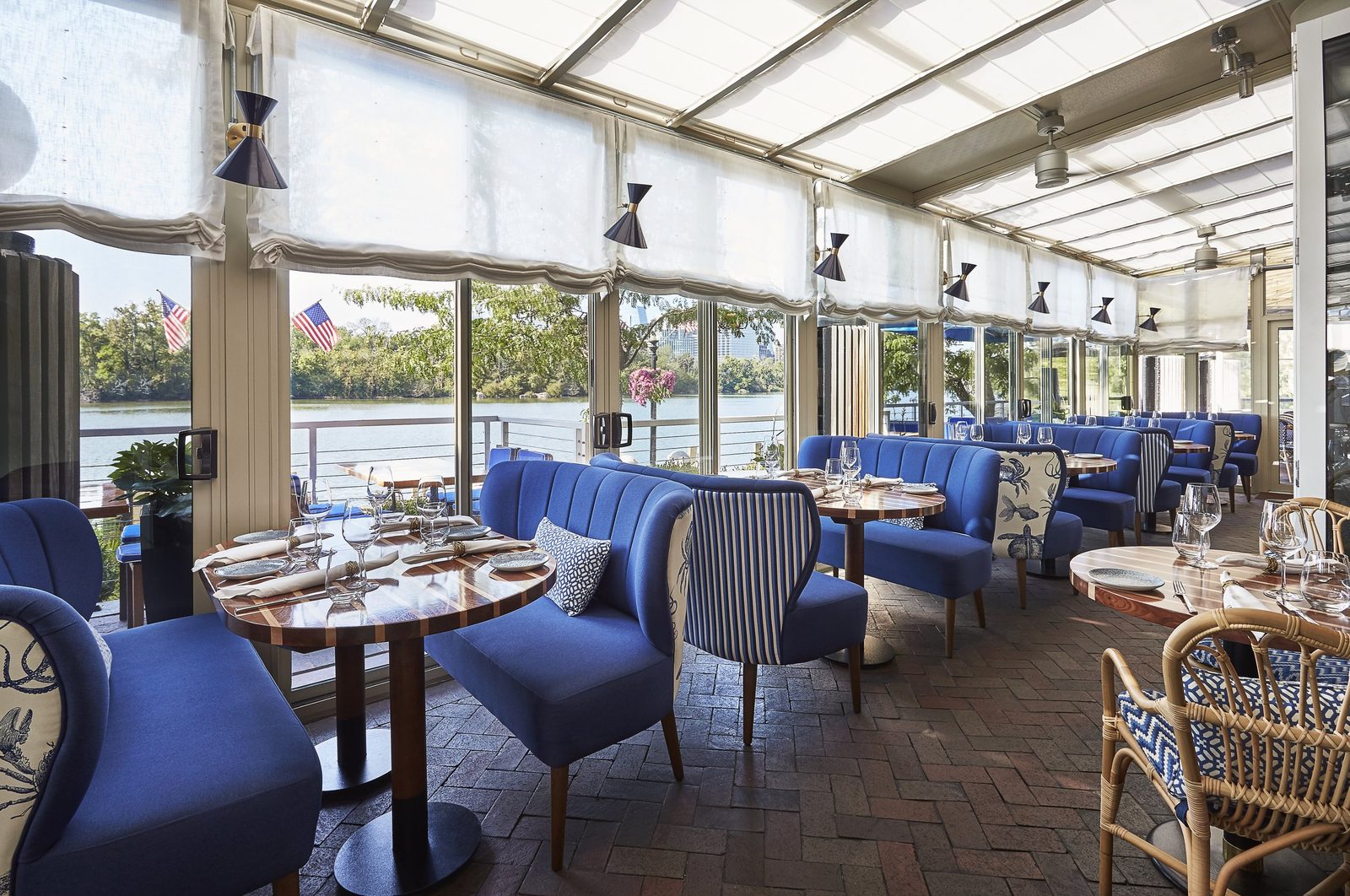
The signature Georgetown meal is waterfront and unapologetically expensive. Chef Fabio Trabocchi's Fiola Mare sits on K Street below the Whitehurst Freeway, doing Mediterranean seafood — crudo, handmade pasta, a full raw bar, a tableside cart working the room — with marina views that make it the neighbourhood's consistent see-and-be-seen table. Expect to pay for the privilege: dinner at the waterfront rooms here runs $80 to $150 or more a head once wine is involved, and Fiola Mare sets that tone as much as any address in Georgetown.
Walk the dock a few minutes further and the register drops without the view disappearing. Tony & Joe's Seafood Place is a dock-side patio built for a long happy hour with the river at the rail, and its neighbour on the same waterfront boardwalk, Nick's Riverside Grill, does casual American food to a packed outdoor bar every summer evening — the two of them functioning almost as one long waterside party by June. Inland and up toward the canal, Filomena Ristorante has been Georgetown's Italian landmark since 1983, its dining room looking out over the C&O Canal while the "Pasta Mamas" hand-roll dough in the front window for anyone walking past on the sidewalk.
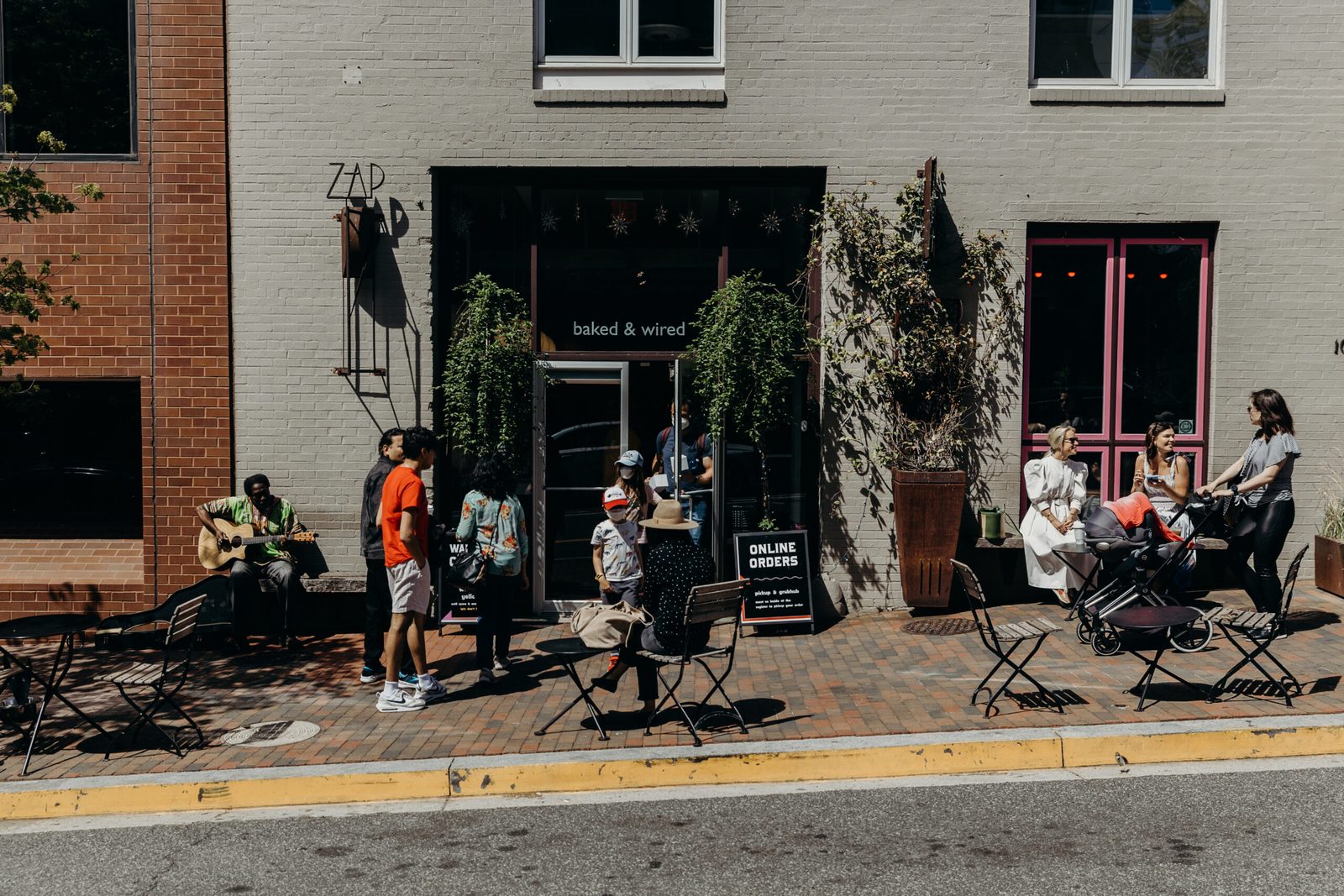
For something quicker and sweeter, M Street is where the D.C. cupcake boom started: Georgetown Cupcake's original shop still draws a line down the block most afternoons. Locals, for what it's worth, tend to send visitors a few doors over instead, to Baked & Wired, just off the canal, for oversized cupcakes and coffee strong enough to counter the sugar.
Nightlife
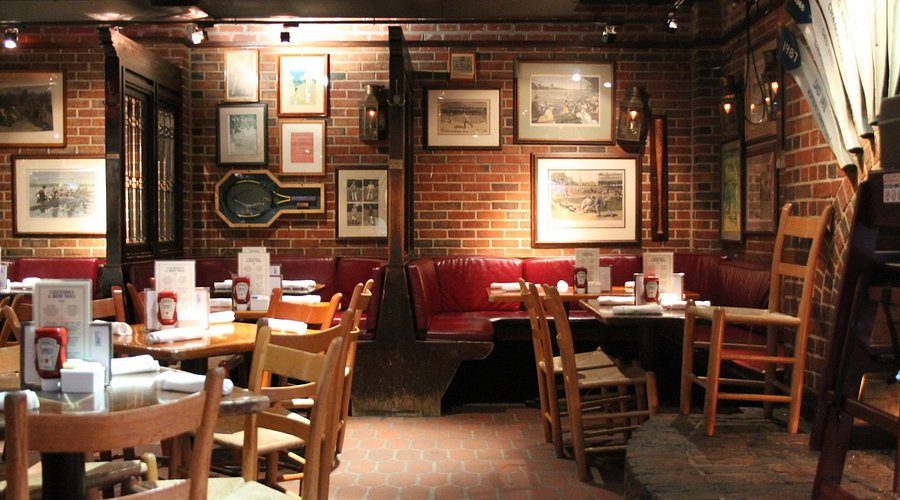
Georgetown's nightlife runs on two different clocks, one collegiate and one considerably older. The Tombs is the collegiate constant: a below-street-level rathskeller that has operated next to Georgetown University's front gate since 1962, with trivia on Tuesdays, karaoke on Wednesdays, a DJ night on Thursdays, and alumni still turning up decades after graduation to drink where they always did.
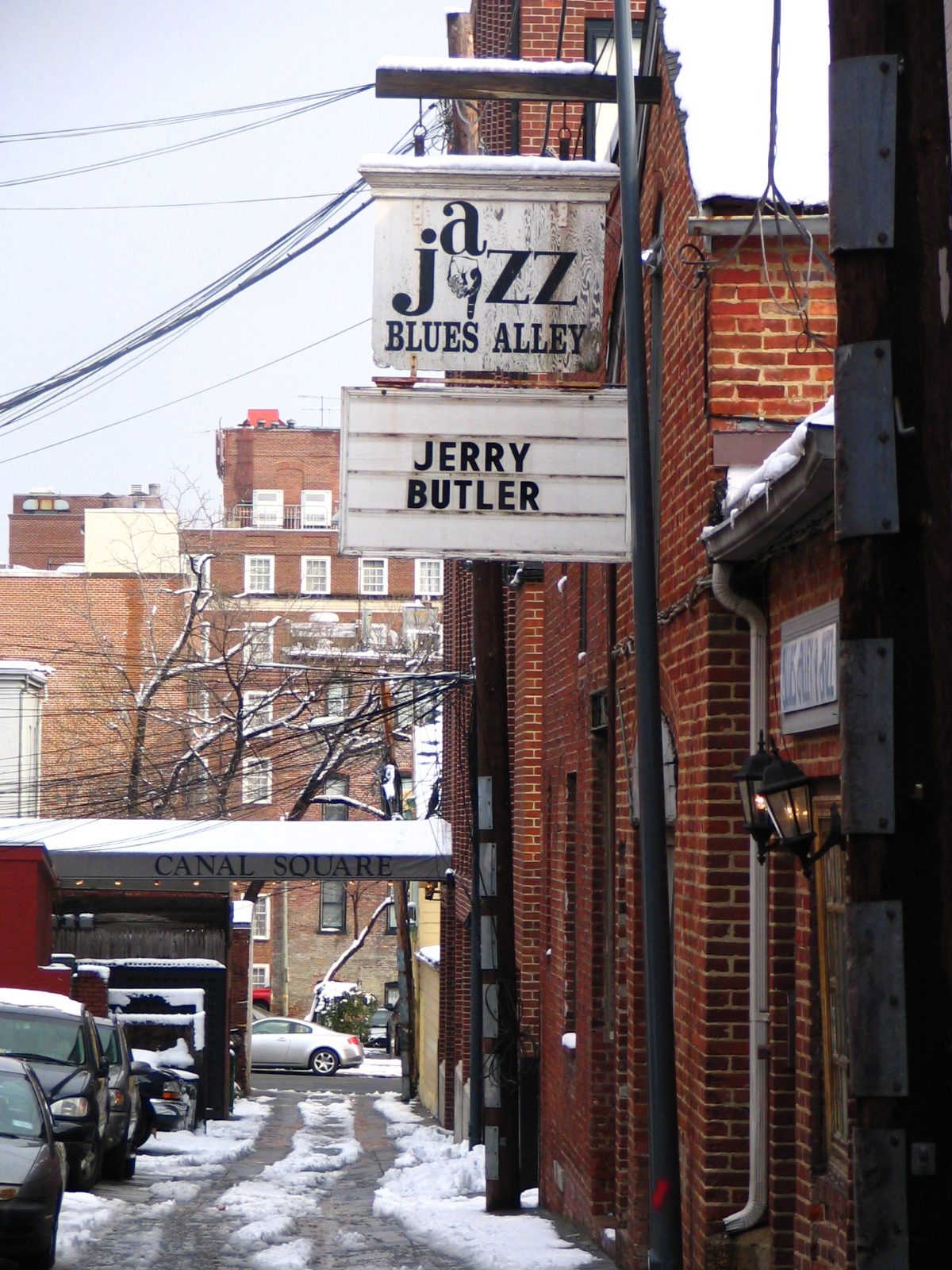
A few blocks up Wisconsin Avenue, the clock resets to something closer to a permanent institution: Blues Alley is the country's oldest continuously operating jazz supper club, running since 1965 out of an 18th-century carriage house, and it still books the kind of programme that makes an evening feel like an occasion rather than an errand to a bar.
Things to do
The C&O Canal towpath is the easiest orientation point in the neighbourhood — flat, tree-lined, and running from street level in Georgetown out past the Maryland line, past the restored lock houses and the original stone locks built in 1850 to lift barges around the Potomac's Little Falls. Even a short stretch, twenty or thirty minutes out and back near the lock houses off Wisconsin Avenue, is enough to trade the shopping crowd for something closer to a country walk.
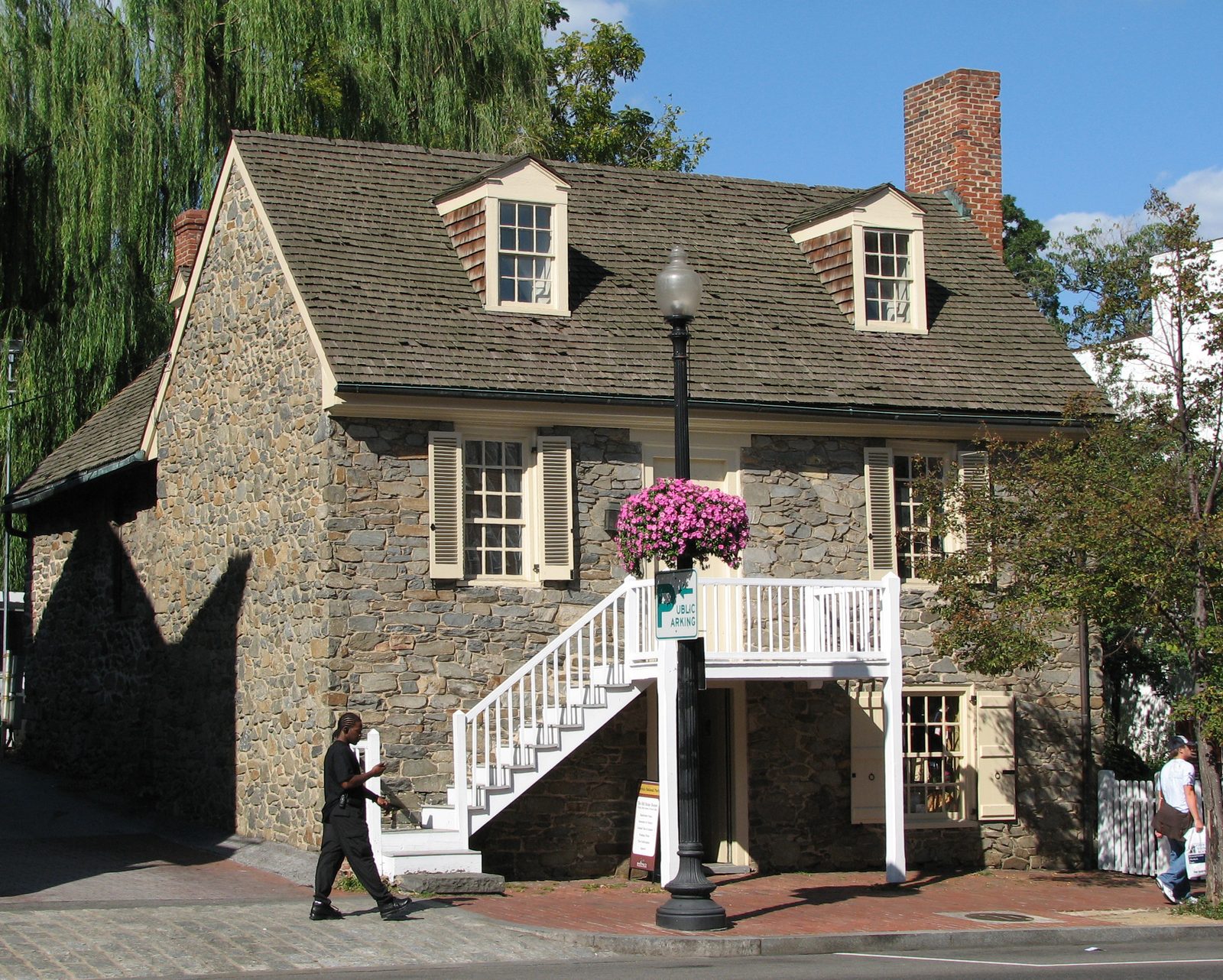
The canal spills out toward Georgetown Waterfront Park, the redeveloped stretch of Potomac riverbank that gives the neighbourhood its one genuinely unobstructed view — across the water to the Kennedy Center and Theodore Roosevelt Island, no rowhouse or shopfront in the frame. And for a much older kind of landmark, the Old Stone House on M Street was built in 1766 and is the oldest structure still standing on its original foundation anywhere in D.C.; it's a free museum now, easy to miss between the retail storefronts on either side of it, and worth the five minutes it takes to duck in.
Don’t miss in Georgetown
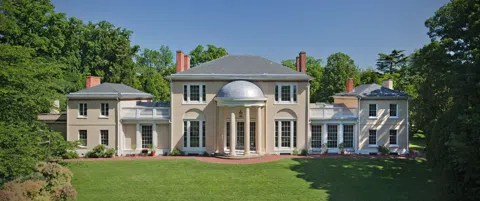
Dumbarton Oaks gardens and museum
The historic C&O Canal path
Georgetown Waterfront Park
Shopping
M Street and Wisconsin Avenue cross in an X at the centre of the neighbourhood, and between them they carry most of Georgetown's retail. The mix is mainstream chains — Zara, H&M, Sephora, Lululemon, J.Crew — set into restored Federal storefronts, run alongside independent jewellers and homeware shops, with a Barnes & Noble anchoring one stretch of the strip. It isn't a bargain district by any measure; the shopping here skews toward the same upscale register as the restaurants and hotels, which is precisely why it draws the boutique-hunting, walkable-strip crowd who come here specifically for that density rather than for discounts.
Where to stay in Georgetown
The waterfront hotels put you closest to the restaurant scene and the canal but furthest from any Metro connection, which in Georgetown is the trade-off that governs almost every stay. The Ritz-Carlton Georgetown is built into a converted 1930s incinerator building right on the canal, industrial bones dressed up into a five-star shell. The Rosewood Washington, D.C. is smaller and quieter, a five-star property with a Wolfgang Puck restaurant attached, pitched at travellers who want the neighbourhood's calm rather than its bustle. Hotels here start around $400 to $500 a night in peak season, in keeping with a neighbourhood that is, across the board, one of D.C.'s pricier places to spend a night.
Hotels in Georgetown
Our best-rated stays in this neighbourhood. Prices are approximate “from” rates — confirmed at the provider when you continue. We may earn a commission if you book through our partners — at no extra cost to you.
Loading hotels in Georgetown…
Getting around
Georgetown has no Metrorail station, a gap dating to the transit system's original construction in the 1960s and 70s that was simply never filled in later, and it is the single fact that shapes every visit here. WMATA's D80 bus, formerly numbered the 33, runs along Wisconsin Avenue and K Street to Union Station and the Red Line; the D6 covers the route to Dupont Circle. Failing a bus, it's a 20 to 25 minute walk from Foggy Bottom Metro, a straightforward Capital Bikeshare ride, or a short rideshare or taxi hop from most of the rest of the city, including from Reagan National Airport if you're arriving straight off a flight. None of this is a hardship once you're actually inside Georgetown — the neighbourhood is one of the lower-crime, most residential-feeling parts of central D.C., busy and well-lit along M Street well into the evening, and only quieter and dimmer once you drift off the main strip toward the darker stretches along the water. It's simply worth knowing before you commit to a hotel here that every day trip elsewhere in Washington starts with a bus, a bike, or a car, not a straight shot underground.
Gallery
Georgetown in pictures
Georgetown — your questions
Is Georgetown a good area to stay in Washington?
Yes for atmosphere and a waterfront table — it's one of the most walkable, historic-feeling parts of D.C., with better shopping and dining than most neighbourhoods. The trade-off is transit: there's no Metro station, so every day trip elsewhere in the city starts with a bus, bike or rideshare.
Why doesn't Georgetown have a Metro station?
Local opposition during the Metrorail system's original construction in the 1960s and 70s kept a line out of the neighbourhood, and the gap was never later filled. The closest stations today are Foggy Bottom and Dupont Circle, both a walk or short bus ride away.
What's the best way to see the C&O Canal?
Walk or bike the towpath starting near the lock houses just off Wisconsin Avenue — it's flat and well-marked, and even a short 20-30 minute stretch passes the original 1850 stone locks before the crowds thin out.
How expensive is Georgetown compared to the rest of D.C.?
It's one of the pricier neighbourhoods across the board — dinner at the waterfront restaurants runs $80-150+ a head with wine, and hotels start around $400-500 a night in peak season, with shopping skewing upscale to match.