The Washington issue
A Slow Outdoor Day Along Washington's Rock Creek Park
Five car-free miles of Beach Drive, a working mill, two fine gardens and a kayak at the river: the capital's easiest good day, planned properly.

By Noa BergströmThe District, one neighbourhood at a time
Rock Creek cuts a wooded trench across the top half of Washington, and for once the city has agreed to leave a thing alone. Five miles of the road on the valley floor have been closed to cars since 2022, so you can walk or ride from a nineteenth-century grist mill down towards the Potomac without waiting at a single light. It is the easiest good day in the capital, and most of it costs nothing.
Five miles of road with no cars on it
Beach Drive, Rock Creek Park (the valley floor, north of Woodley Park) is the spine of the day and the part that needs no planning at all. About five miles of it, along with Bingham Drive and Sherrill Drive, were permanently closed to motor traffic in 2022, leaving a broad, well-surfaced two-lane road running under mature hardwoods with the creek alongside. Nothing to book, nothing to pay, no group size that troubles it. You can walk six abreast and still argue about where to eat afterwards.
Because this is a road and not a trail, the surface is flat, wide and genuinely usable by wheelchairs and buggies, which is not true of the dirt paths climbing the valley walls on either side. The gradients are gentle; the creek does the work of losing height. If you want a number to plan around, five miles at a conversational pace with stops runs to about three hours, and you can join or leave at most cross streets, so half of it makes a perfectly respectable morning.
There is one exception. The National Park Service has begun opening the closed section to cars for two Scenic Driving Days a year, one in spring and one in autumn. They are announced in advance, and they are the only days the road behaves like a road again. If a car-free walk is the whole reason you are coming, check the park calendar before you commit the morning.
Plan your Washington trip
Live prices from our booking partners.
Free cancellation on many rooms. We may earn a commission when you book.
Peirce Mill and the halfway stop
Peirce Mill (Tilden Street, mid-park) is the natural break, and the only building on the walk with a real claim on your attention. It is the last survivor of the many mills that once lined Rock Creek, back when the valley was industrial rather than recreational. The creek's fall was the power supply, and this squat stone mill is what is left of that economy. Entry is free, and the grounds are open whether or not the door is.
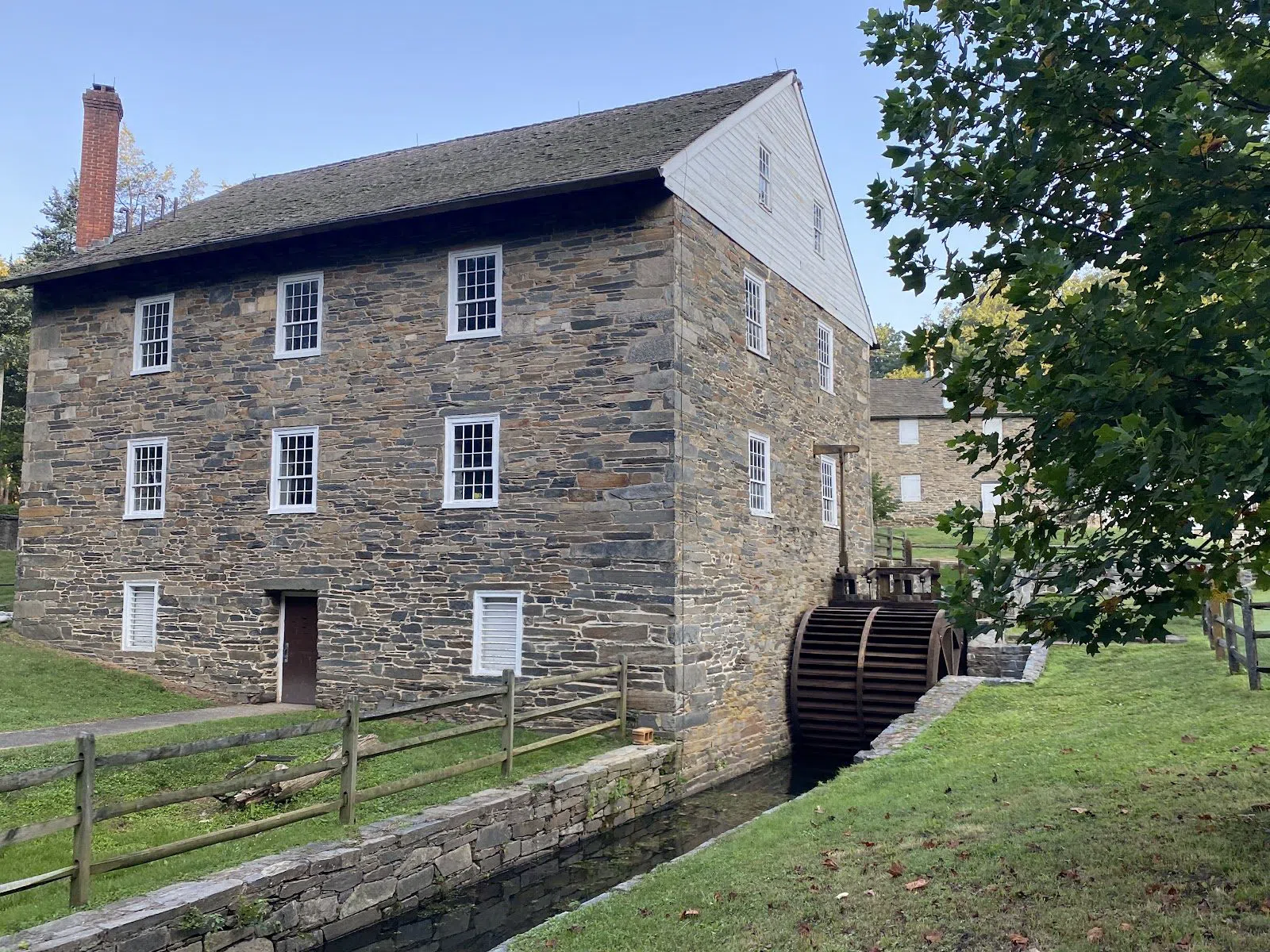
The hours are the catch, and they are why people arrive to a locked building. Opening is weekend-heavy: roughly Friday to Sunday, 10am to 4pm, April to October, and weekends only through the winter. Check before you build a day around it. The interior is small, so a party of ten should go in twos and threes and let everyone else sit by the water. This is a mill, not a museum wing, and it fills fast.
Riding and golf on the ridge
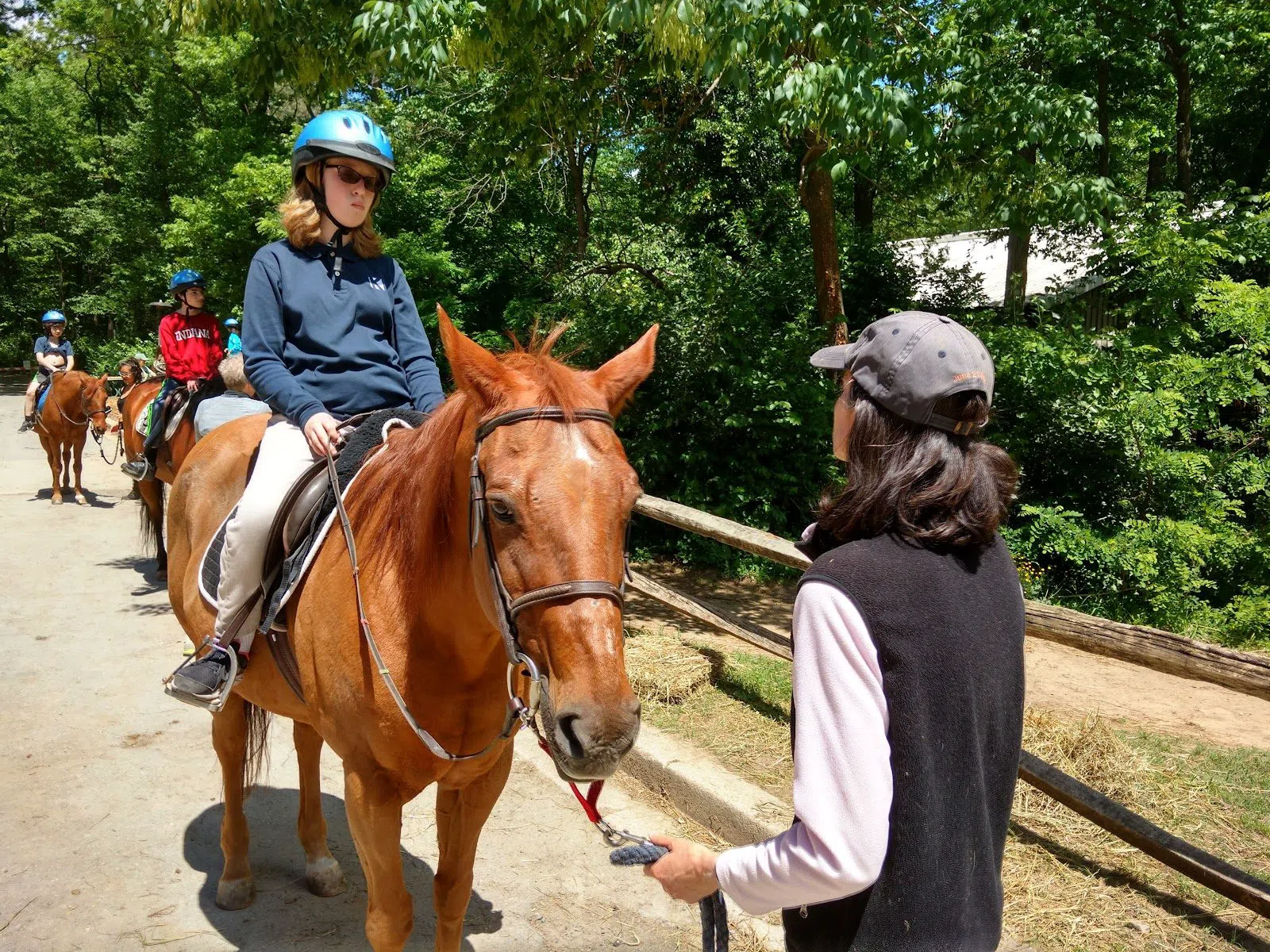
Two things on the ridge above the creek reward advance thought. Rock Creek Park Horse Center (central Rock Creek Park) reopened in May 2025 under Metropolitan Equestrian, after the previous concessionaire walked away, and now runs trail rides, lessons, pony rides and stable tours out onto the park's 13 miles of dirt bridle trails, the half of the park Beach Drive never touches and almost no visitor sees. Rides are capped by how many horses are free, which makes this the opposite of a drop-in operation. Book, and book well ahead for more than two or three riders: a couple can sometimes slot into a gap, a group of eight will not.
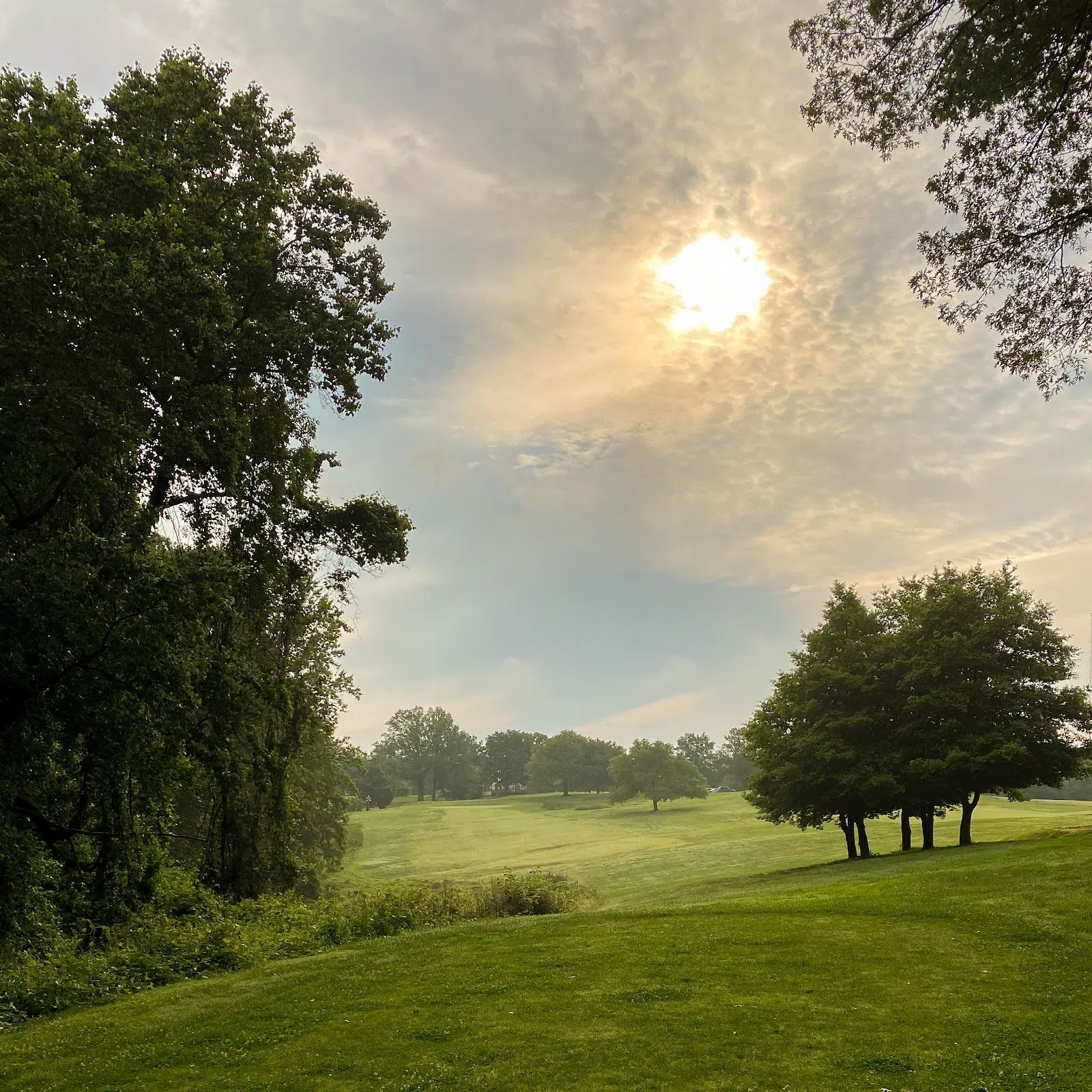
Rock Creek Park Golf Course (the park's northern end, off 16th Street) is cheap in a way urban golf almost never is, from about $19 for nine holes and less midweek or for seniors and juniors. Go in knowing what you are buying, which is half a course. The front nine plus a five-hole loop are playable; the back nine is shut pending safety work, and the wider National Links Trust rebuild was still paused in May 2026. What remains is a 1920s William Flynn layout, a serious name to find on a municipal card. Walk on midweek; book a tee time at weekends, and expect company.
The zoo that sits inside the valley
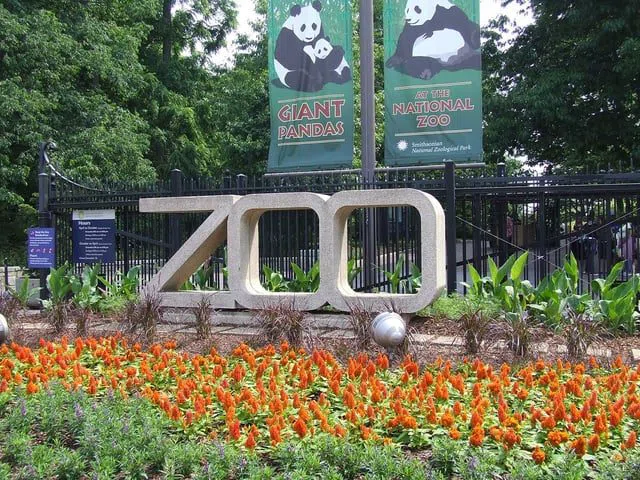
Smithsonian's National Zoo and Conservation Biology Institute (Woodley Park) is unusual among big-city zoos in that it does not interrupt a park day. It occupies the Rock Creek valley itself, so you arrive out of the same landscape and leave back into it, and the walking inside carries straight on from the walking outside.
Admission is free, but a timed entry pass is required for every visitor, infants included. Book the whole party on a single reservation before you go. Hours run 8am to 6pm from 15 March to 14 September, and 8am to 4pm through the winter, with last entry an hour before closing and the indoor houses shutting thirty minutes before that. Read those two lines together before you show up at three o'clock in October expecting a full afternoon. In winter that leaves you a single hour, and none of it indoors.
Entry is free; parking is charged. With Metro on the valley's rim at both Woodley Park and Cleveland Park, paying to park here is a choice rather than a necessity.
Gardens on the eastern rim
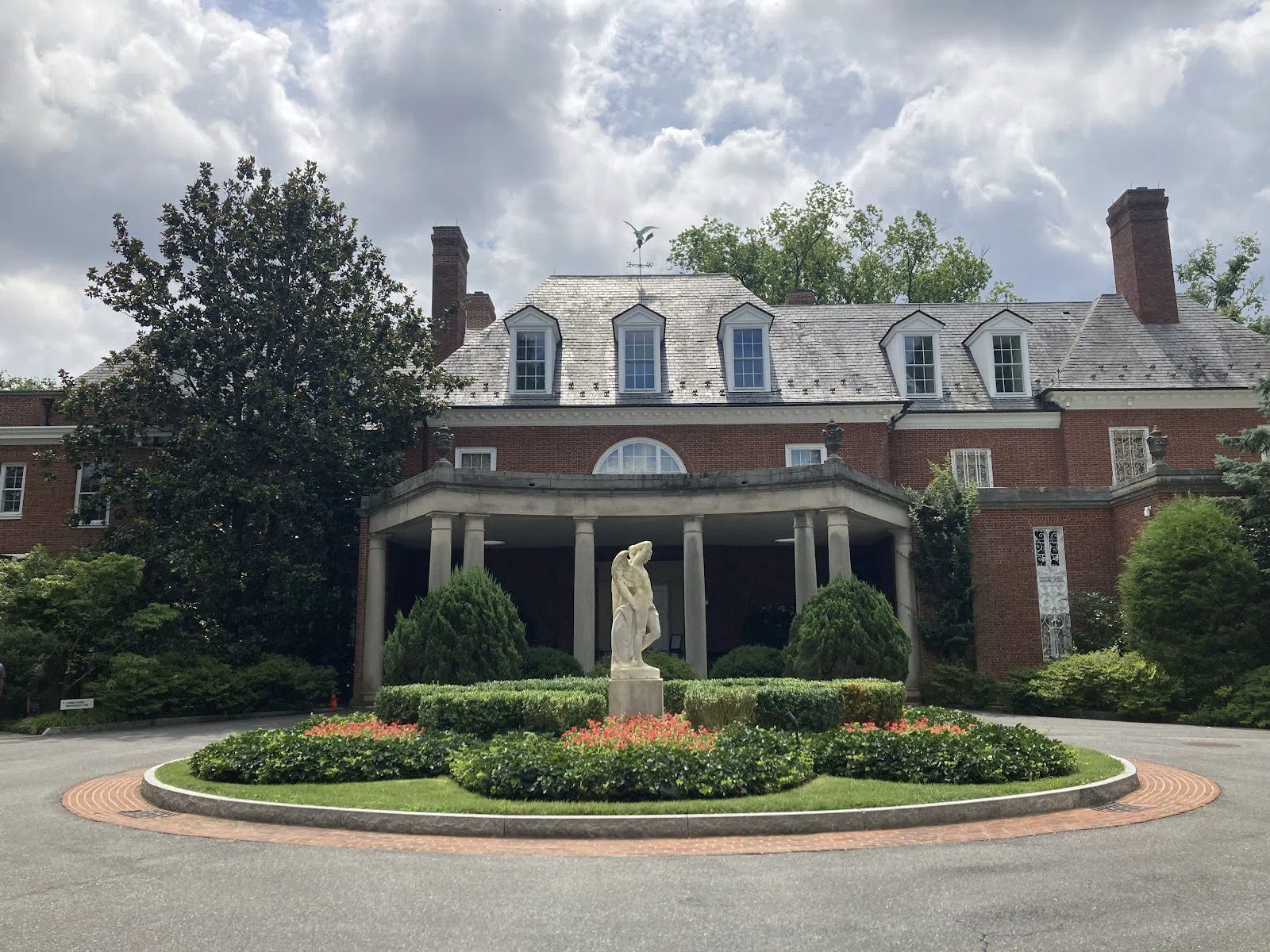
The eastern edge of the valley holds the gentlest walking in the city, for anyone who wants outdoors without effort. Hillwood Estate, Museum & Gardens (Forest Hills) is twenty-five acres of immaculately maintained formal gardens (Japanese, French, a rose garden, lawns cut to within an inch of their lives), and the strongest option here if someone in the party cannot manage five miles of road. It opens Tuesday to Sunday, 10am to 5pm, closed Mondays and for several weeks each January, on a suggested donation of around $20 for adults. Groups are fine; register in advance in the spring and autumn peaks, when the gardens are the reason everyone is there.
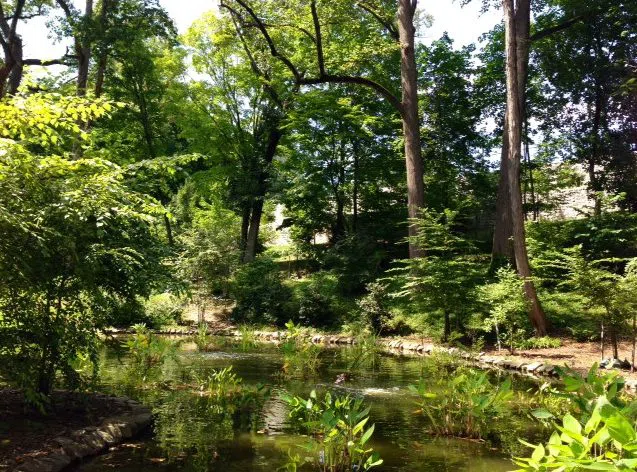
Tregaron Conservancy (between Cleveland Park and Woodley Park) is thirteen acres of restored woodland garden that most visitors never find, free and unticketed, open dawn to dusk, with entrances on Macomb Street and Klingle Road and a link through to the Klingle Valley Trail. It is a useful low-effort substitute now that the park's Nature Center is closed. The paths are narrow and it sits among houses, so informal groups are welcome but a loud one is not.
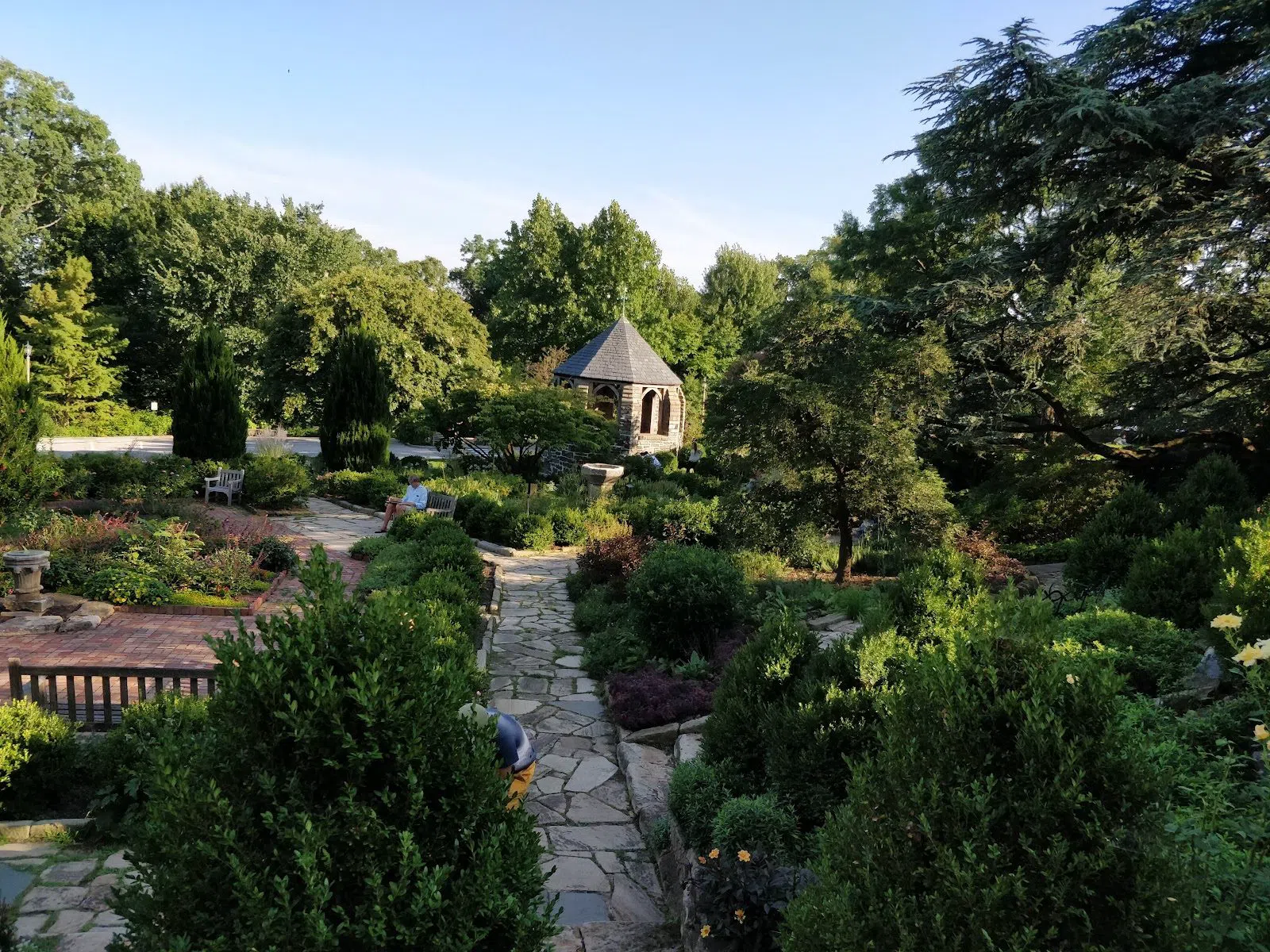
Bishop's Garden, Washington National Cathedral (Cathedral Heights) is a properly walled, terraced garden of herbs, native plants and biblical species with the cathedral going up like a cliff behind it. The garden and grounds are free even though entry to the cathedral is not, and they are open dawn to dusk. The Garth is currently closed for central tower restoration, which takes nothing away from the garden itself.
Where the creek reaches Georgetown
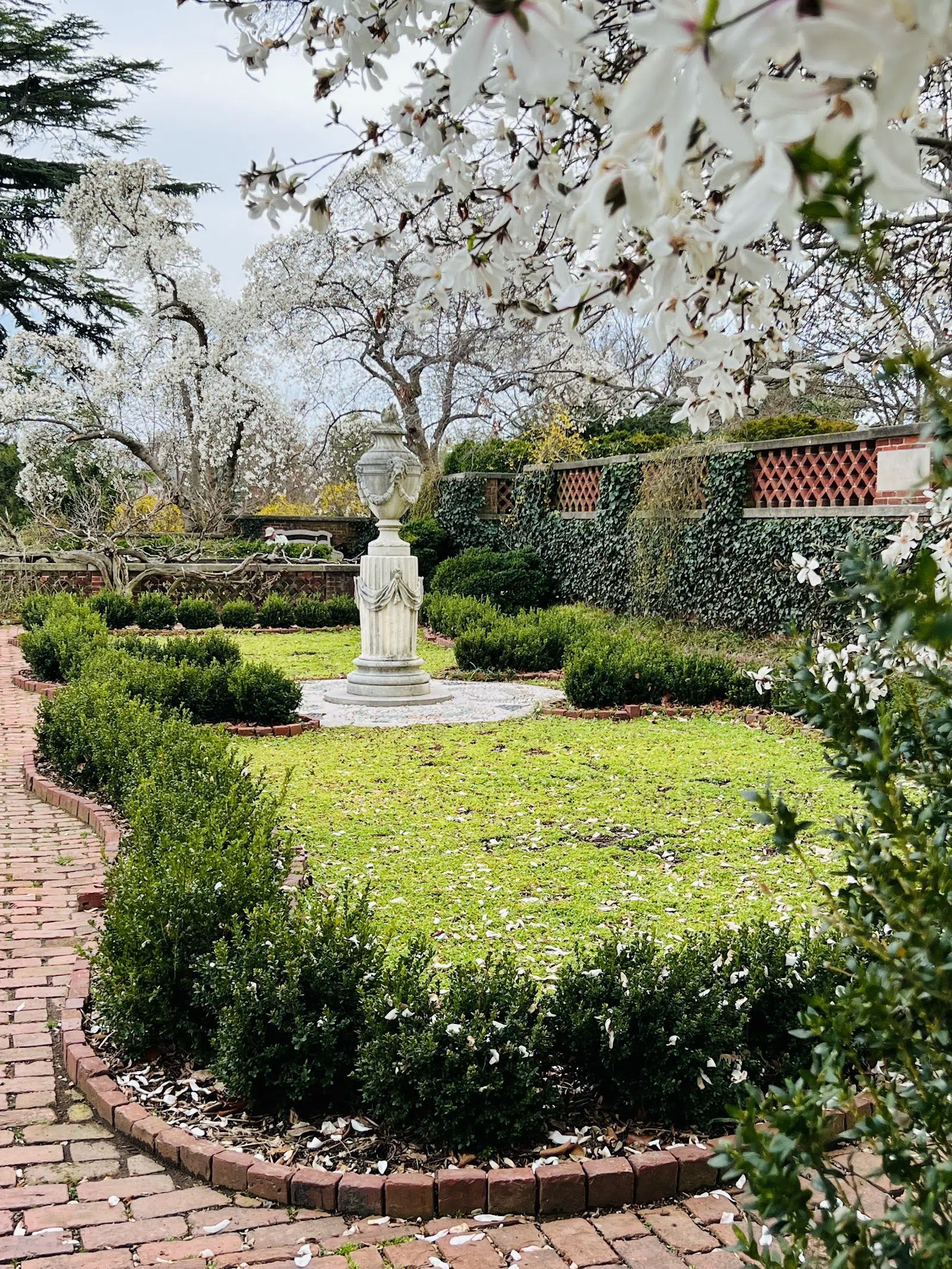
Follow the valley far enough and it delivers you to the river. Dumbarton Oaks Gardens (Georgetown) is Beatrix Farrand's masterpiece and, on most days, the finest garden in the city: a sequence of terraces and enclosed rooms stepping down a hillside, each one composed as deliberately as a building. Two things decide whether it fits your day. It opens only from 2pm to 6pm, Tuesday to Sunday, in the main season of 1 March to 31 October, and tickets, around $15, must be bought online in advance, with none sold at the gate. There is a limit of ten tickets per household per day, which is splendid for a couple and awkward for a coach party.
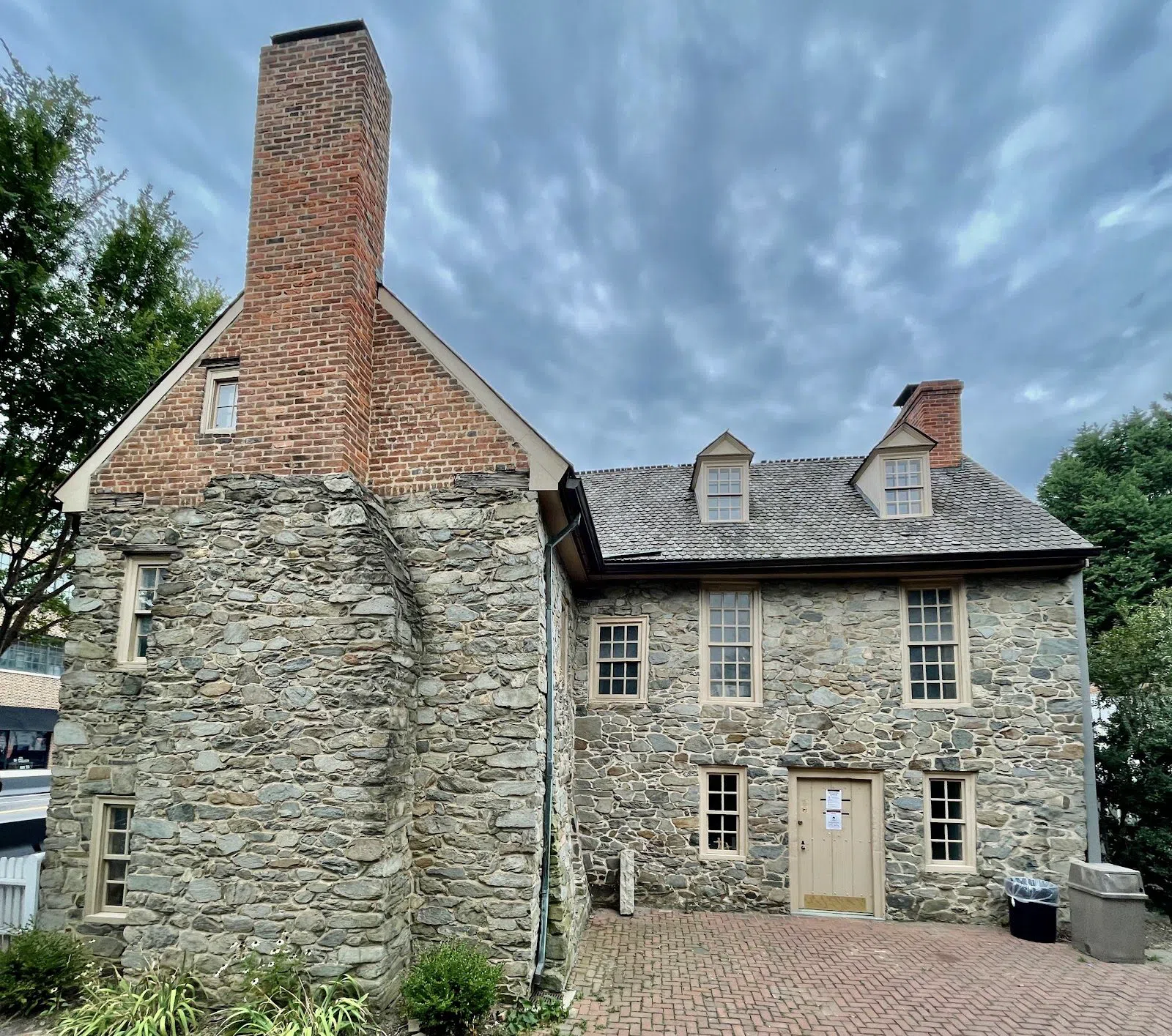
Old Stone House (M Street, Georgetown) is the oldest unchanged building in Washington, put up in 1765 and now sitting in the middle of the shopping street like a survivor of a different town. The house has limited hours (roughly Monday and Friday 12 to 7, Saturday and Sunday 11 to 7, closed Tuesday to Thursday), and the interior is tiny, so a group should hold in the garden and go in a few at a time. The walled garden behind is the real prize anyway, free and open daily from sunrise to sunset through the gate on M Street, even when the house is locked.
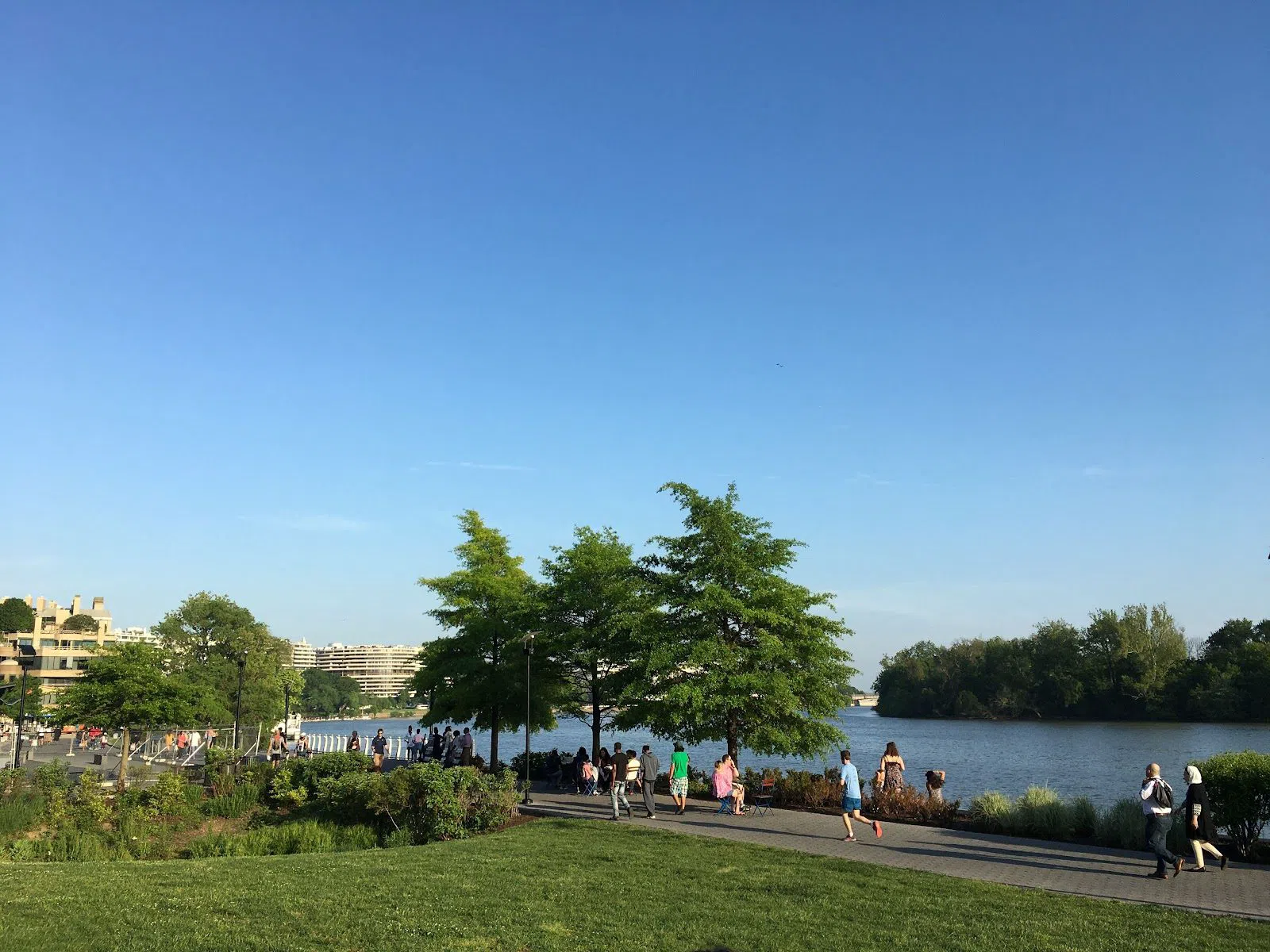
Georgetown Waterfront Park (Georgetown) is where the Rock Creek valley finally reaches the Potomac, and the flattest, easiest walking of the whole day. There is a walkable stone labyrinth at the western end and broad river steps at the eastern, and the lawns absorb large groups without complaint. The fountain runs seasonally only.
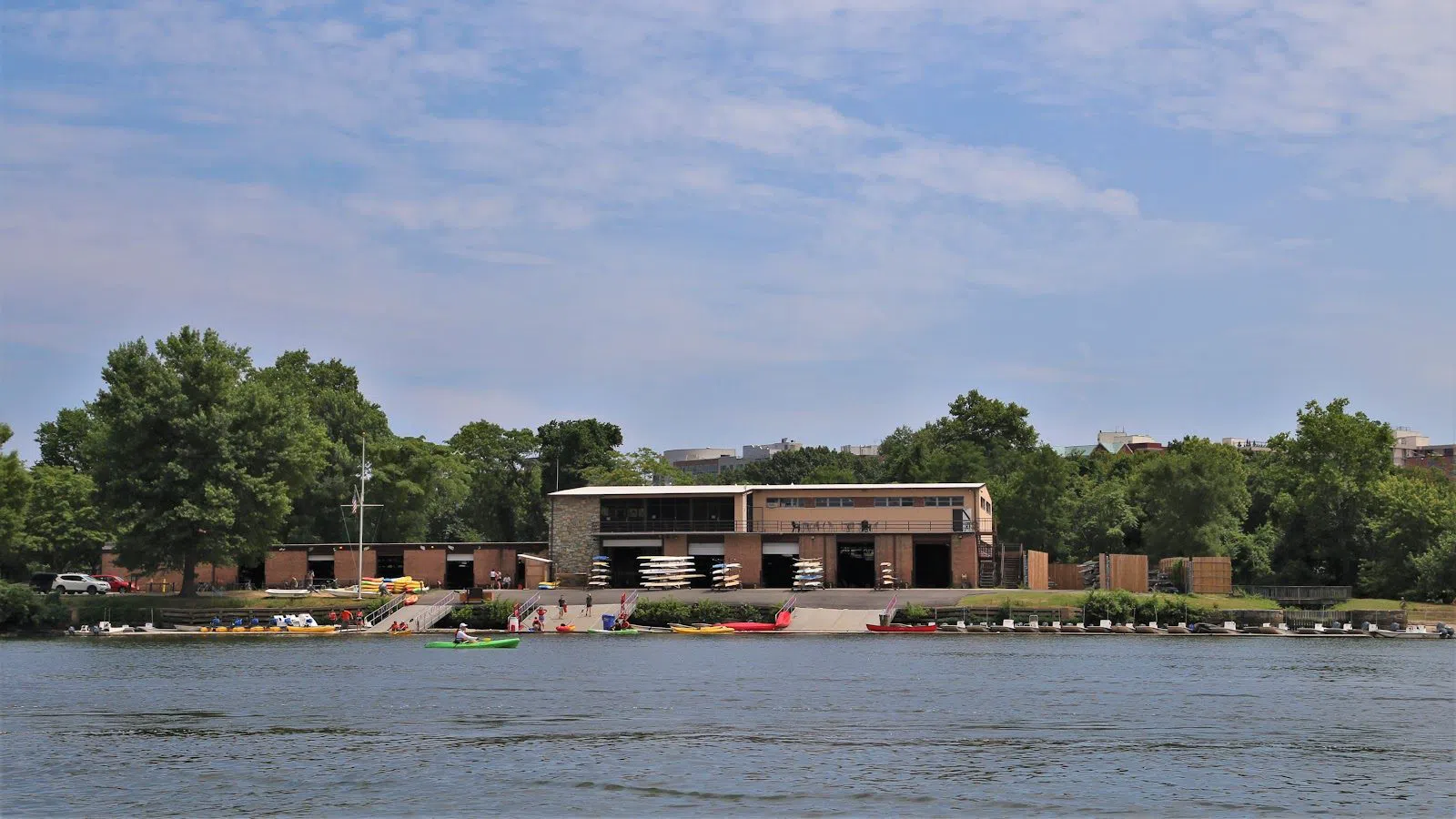
Thompson Boat Center (where Rock Creek meets the Potomac, below Georgetown) rents kayaks and canoes by the hour to walk-ups, and sits exactly at the creek's mouth, which makes it the logical full stop on a day spent tracing the water downstream. It is seasonal and weather-dependent: mornings are the reliable window, Sunday hours are often short, and at a summer weekend a group should ring ahead and not trust the fleet.
Longer flat miles for anyone still walking
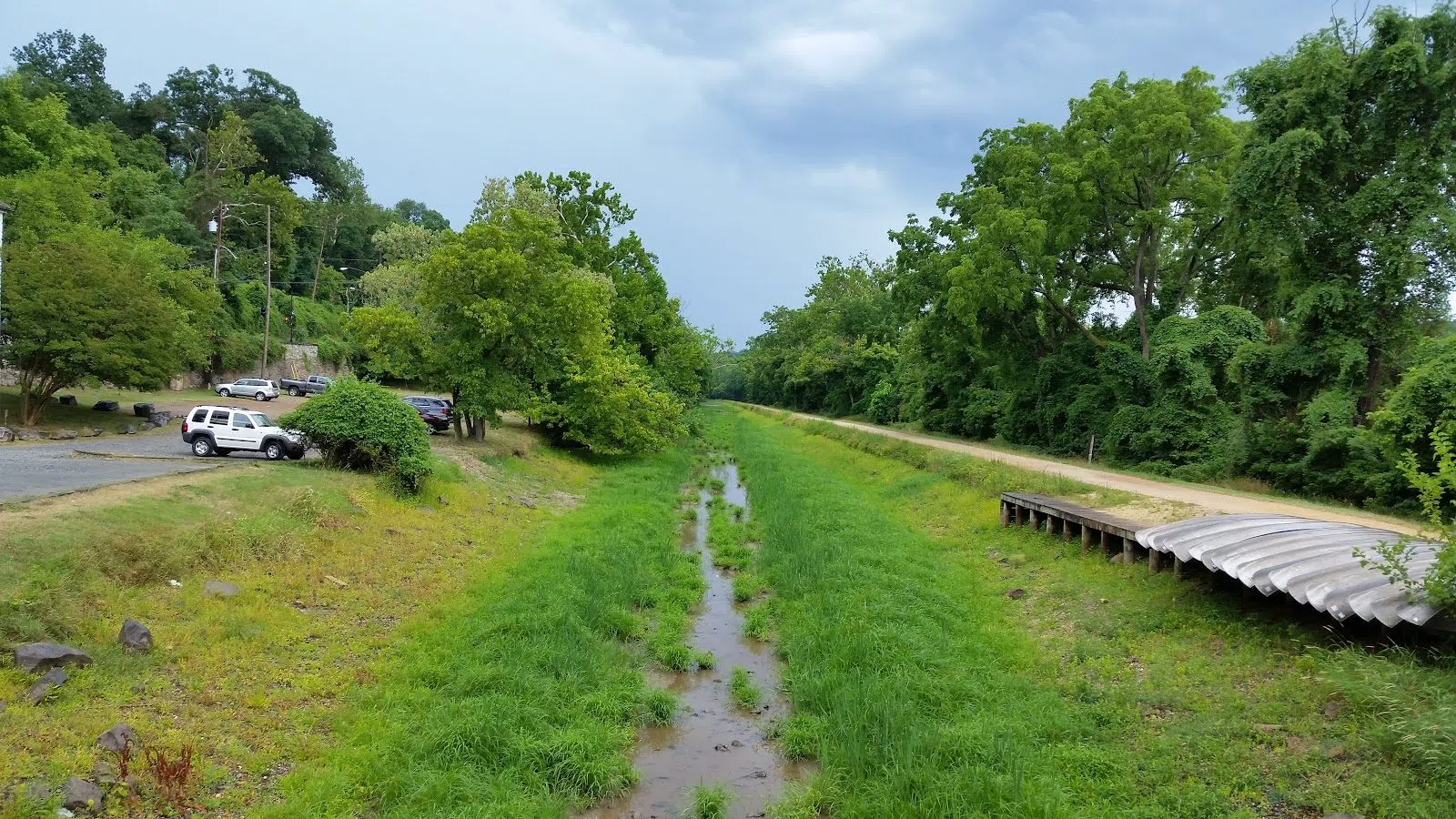
Capital Crescent Trail (starting in Georgetown, beside the waterfront) is the least demanding long walk or ride available here, because it is an old railway grade: paved, wide, and almost perfectly flat for its seven or so miles out to the District line and beyond. The closed section people mention is a different stretch entirely, further out, shut for light-rail works and due back around late 2026. The piece that starts in Georgetown is open and always has been. It is busy with cyclists, so keep to the right and pass on the left, and keep a group from spreading across the full width.
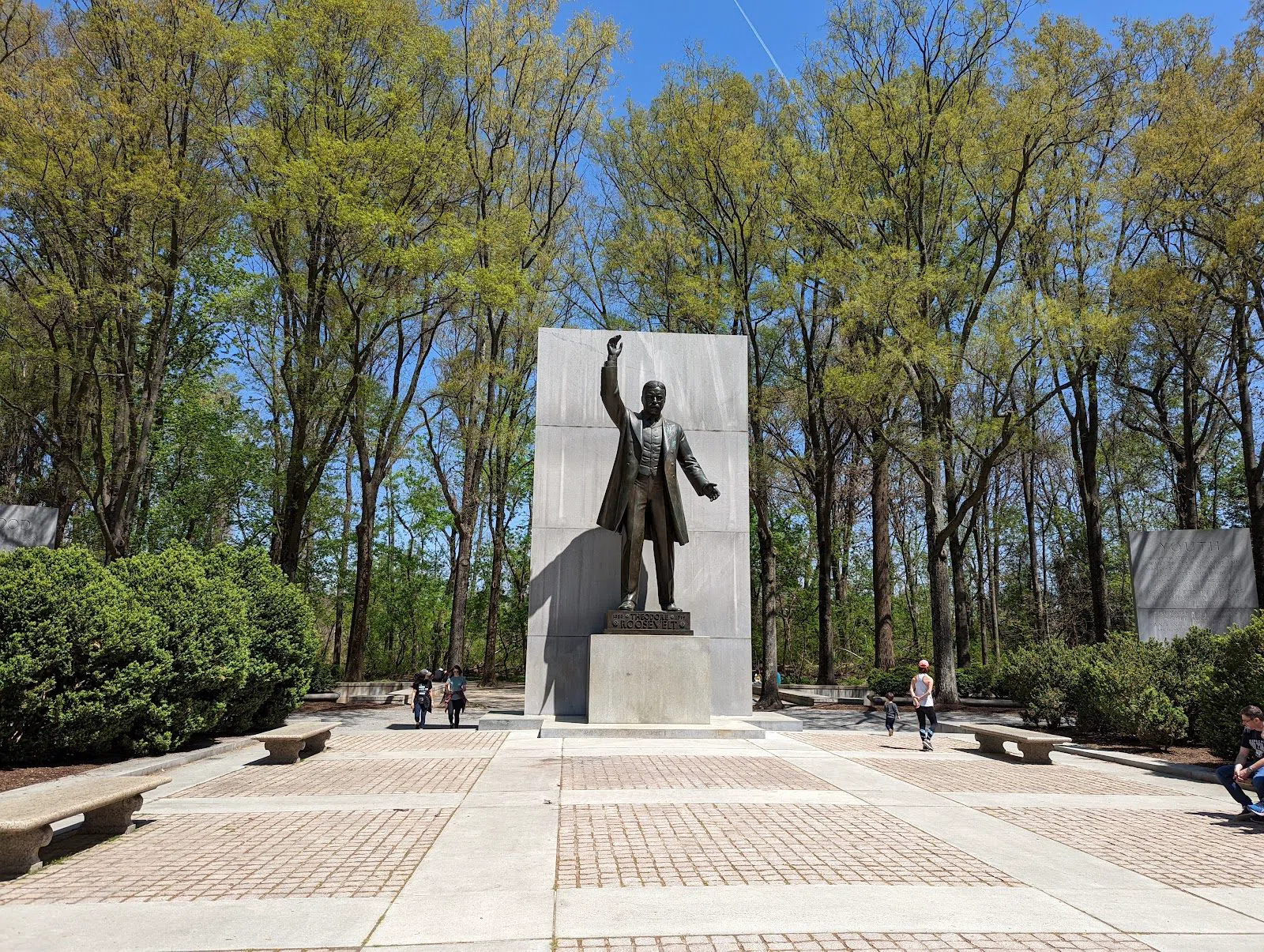
Theodore Roosevelt Island (in the Potomac, reached on foot from the Virginia shore) is eighty-eight wooded acres with a swamp boardwalk that feels nothing like a capital city, free and unticketed, open 6am to 10pm year-round. It is reached only by footbridge from a car park on the far side of the river, so it is a deliberate detour rather than a drop-in. After heavy rain the Potomac floods the low trails and the boardwalk turns slippery; check conditions first, and note the boardwalk narrows to single file, which slows a group considerably.
Two trips east of the valley
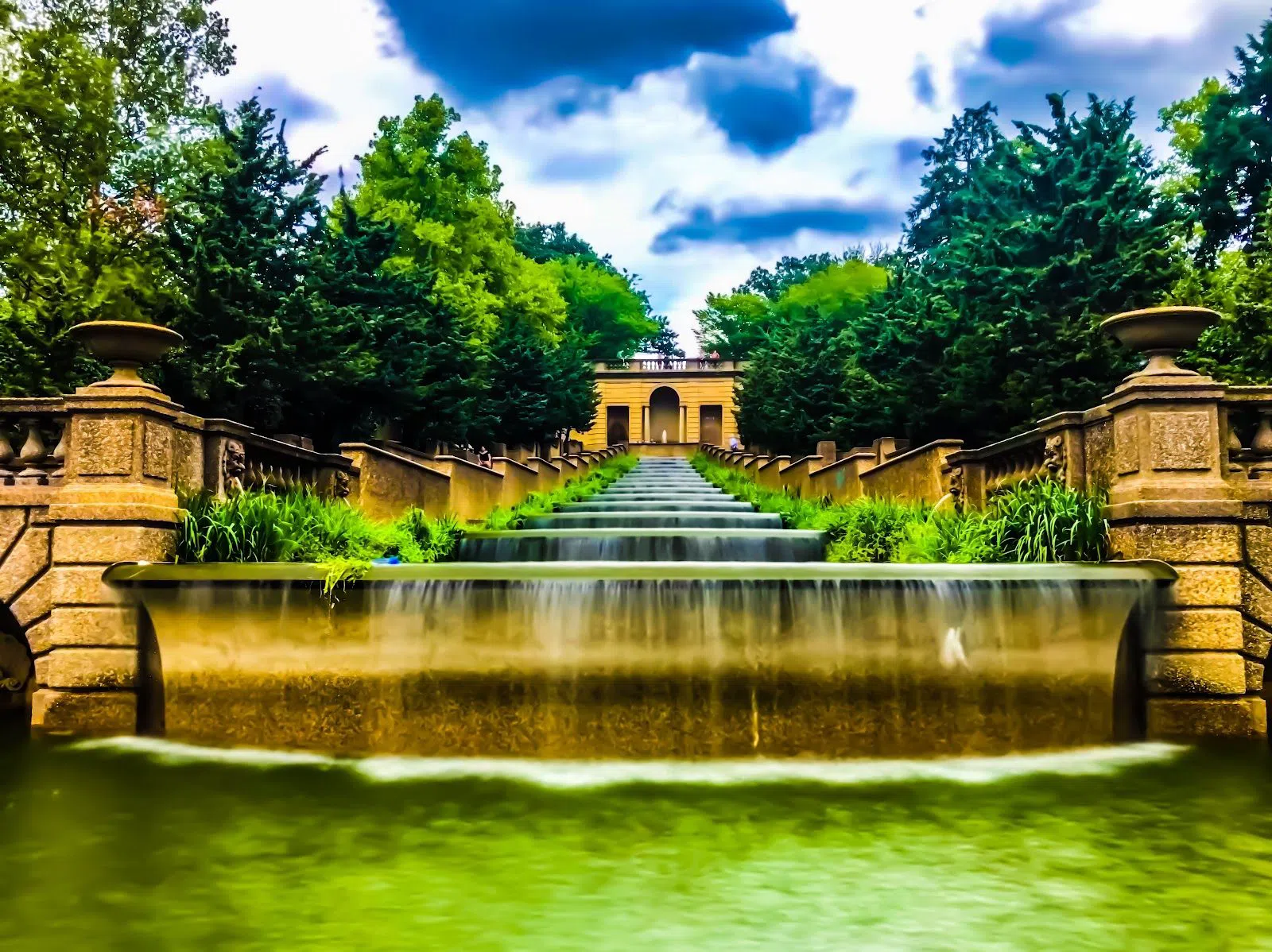
Meridian Hill Park (16th Street, on the Columbia Heights edge) is worth the short hop east. Known locally as Malcolm X Park, it holds a cascading fountain that is the best piece of landscape architecture in the city, an Italianate stair of water dropping down the hillside, and a drum circle that has gathered on Sunday afternoons since 1965 and absorbs any number of people. Restoration has been rolling through the park: the upper lawns reopened in early September 2026, but the lower level is scheduled to stay closed until 30 September 2026, which is where the fountain and the drum circle live. Until then, the trip buys you the upper lawns only.
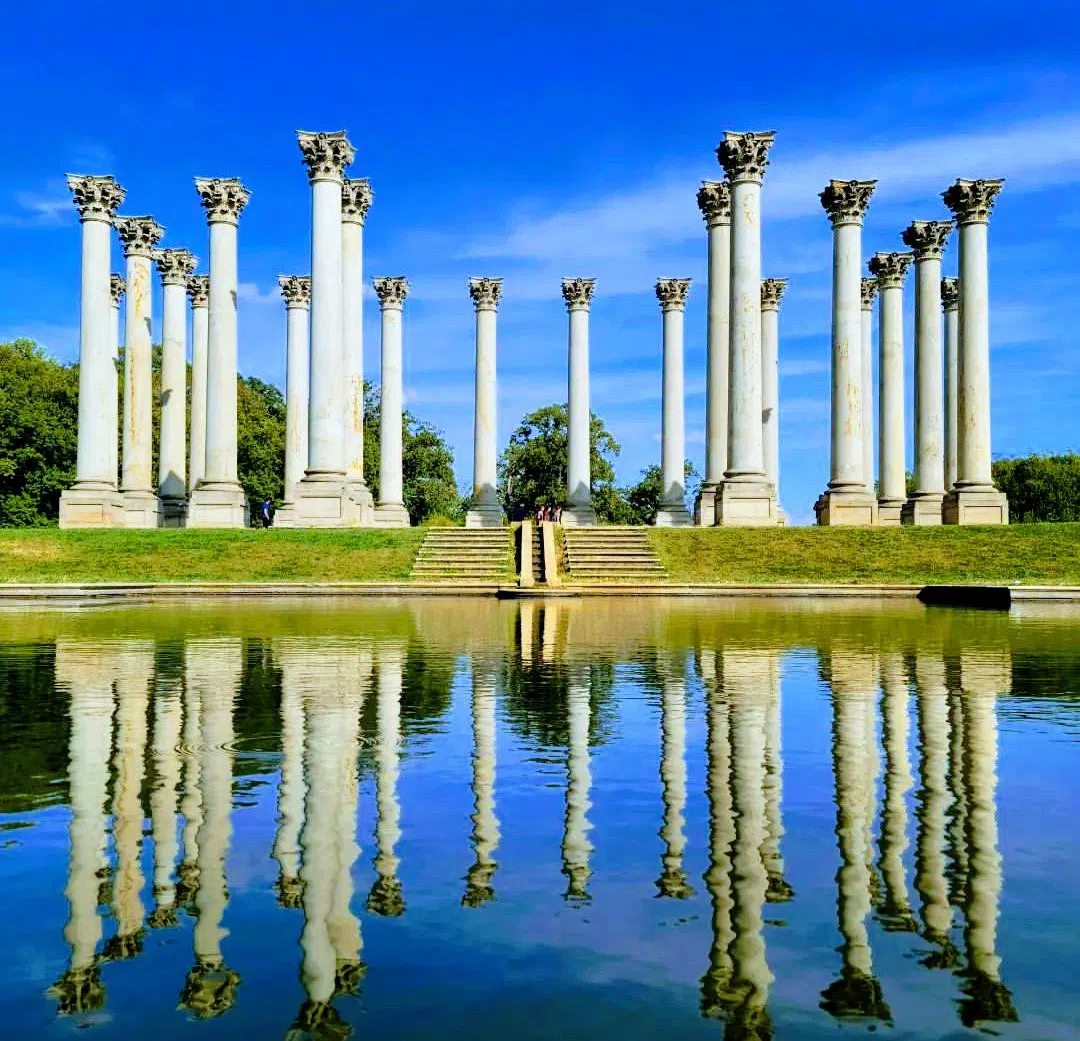
United States National Arboretum (Northeast Washington) is the easiest place in the city to move a large group, at 446 acres with free parking and roads you can drive between collections. Go for the National Capitol Columns above anything else: twenty-two Corinthian columns salvaged from the Capitol's old East Portico and re-erected in an open meadow, standing there holding up nothing at all, which is a stranger and better sight than it sounds. The national bonsai collection is the other reason. Open 8am to 5pm daily except Christmas Day, last admission 4.30pm; admission and parking are free.
Practical notes
The Red Line runs along the valley's eastern rim. Woodley Park and Cleveland Park both put you within ten minutes of Beach Drive on foot, and Van Ness serves the northern half. Georgetown has no Metro station at all: walk down from Foggy Bottom in about twenty minutes, or take a bus. The Arboretum and the Horse Center are the two places where a car or a rideshare genuinely saves time.
Cards and phones work everywhere; carry a little cash only if you want to tip. Ticketed entries are booked online: Dumbarton Oaks sells nothing at the gate, and the zoo's free passes still have to be reserved in advance. A day here costs $0 if you stick to Beach Drive, the mill, the gardens at the cathedral, Tregaron and the waterfront. Add Hillwood, Dumbarton Oaks and an hour in a kayak and you are at roughly $50 a head.
Let two windows dictate the shape of the day. Dumbarton Oaks opens only from 2pm, so the Georgetown half belongs to the afternoon; the boat centre is most reliable in the morning, which argues for kayaking first if paddling matters more than gardens. Hillwood is shut on Mondays, the Old Stone House interior on Tuesday to Thursday, and Peirce Mill on most weekdays. Weekends give you everything at once and the busiest trails.
Anywhere along the Red Line between Woodley Park and Van Ness puts the valley at the end of your street and the Mall twenty minutes away. See the Washington hotel search for what is open near the park. For the rest of the city, indoor days included, start with the Washington guide.
Before you go
Is Beach Drive really closed to cars?
Yes. About five miles of Beach Drive, plus Bingham Drive and Sherrill Drive, have been permanently closed to motor traffic since 2022, and the wide paved road is now open to walkers, runners and cyclists. The exception is the National Park Service's two Scenic Driving Days a year, one in spring and one in autumn, when cars are let back on. Check the park calendar if a car-free walk is the point of your trip.
What do I need to book in advance?
Three things. The National Zoo requires a free timed entry pass for every visitor including infants, so reserve the whole party on one booking. Dumbarton Oaks sells tickets online only, none at the gate, with a limit of ten per household per day. The Rock Creek Park Horse Center is booking-only, since rides are capped by horse availability. Everything else on this route is walk-up or free.
How long does the Beach Drive walk take?
Roughly three hours for the full five car-free miles at a conversational pace with stops, and the gradients are gentle because the creek does the descending for you. Peirce Mill sits about halfway and makes the obvious break. You can join or leave at most cross streets, so half the route is a comfortable morning if three hours is too much.
We're a group of eight — what actually works?
Beach Drive, Georgetown Waterfront Park and the National Arboretum absorb any number without a booking. Hillwood takes groups happily, though registration is advised in peak garden seasons. Dumbarton Oaks is the awkward one at ten tickets per household per day, and both Peirce Mill and the Old Stone House have interiors too small for a group, so send people in in batches and use the gardens. For the Horse Center, book weeks ahead.
Is any of it manageable with a wheelchair or a buggy?
Yes, more than you would expect. Beach Drive is flat, wide and properly surfaced, the most accessible long outdoor route in the city. Georgetown Waterfront Park is paved and level, and the Arboretum has drivable roads between collections. Less suitable: the Theodore Roosevelt Island boardwalk narrows to single file, Tregaron's woodland paths are narrow and soft, and Dumbarton Oaks is built as a series of terraces.